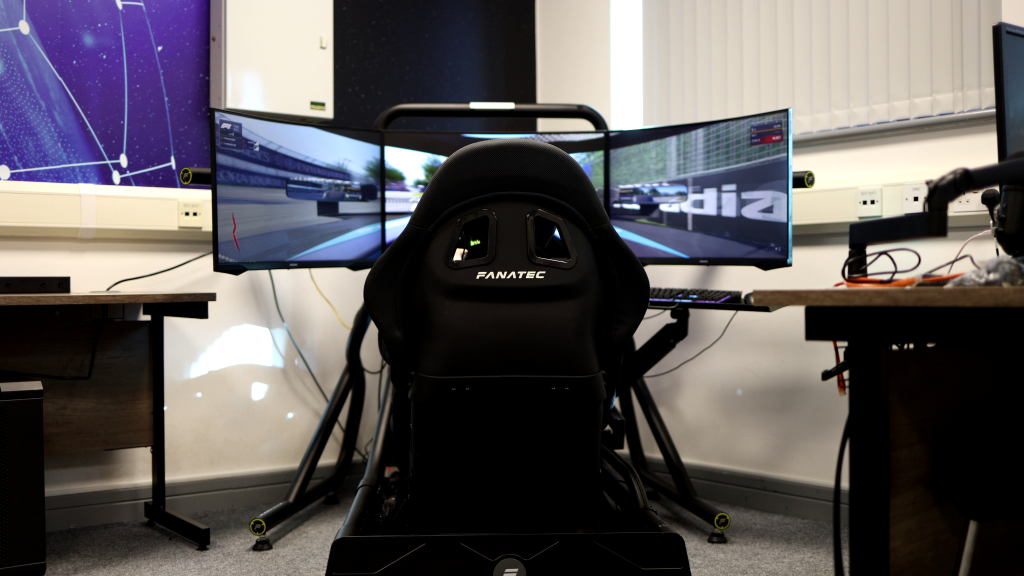
Everything looks fair at first. Same car. Same track. Same event rules. But as soon as the race begins, you can tell something’s off. Some drivers pull away clean while others spin.
This is what assist settings can do in competitive sim racing. They shift the balance in ways that aren’t always obvious. For organisers, ignoring assist settings can lead to problems you didn’t plan for.
Understanding the Role of Assists in Sim Racing
Assist settings are designed to make driving easier. They keep drivers on track, help them fix mistakes, and finish races without too much frustration. Tools like traction control, anti-lock brakes, steering assist, and the racing line are common. They step in to guide or correct how the car behaves. Assists work fine in casual races. They help drivers feel more confident and stay in the race instead of spinning out.
But once a race becomes competitive, those tools start changing how things play out.

Image Source: SimStaff
You could see a newcomer consistently matching lap times with someone who’s been racing for years. But it’s not because they picked it up quickly, but because their assists are smoothing out the work that the other driver has to manage manually.
Traction control lets them power out of corners without fear of spinning. ABS allows harder braking with less risk. Steering assist keeps them pointed in the right direction even if they miss the line. Over a full race, these small things add up. They affect how fast one can drive and how hard they have to work while driving.
One driver may be constantly adjusting, reacting, and feeling every limit of the car, while the other relies on built-in tools to stay stable and fast. On the surface, they’re in the same race. But they’re working under very different conditions.
If assist settings aren’t clearly defined or standardised, the competition becomes difficult to judge.
Assist settings influence how competitive the field is. If there aren’t clear rules, they might introduce gaps that make it harder to determine whether someone is winning due to practice or the tools they’ve enabled.
How Assist Settings Impact Event Outcomes
When you organise a sim racing event, one of the first things you standardise is the setup. Same cars, same track, same conditions. It’s how you make sure every driver is playing under the same rules. But if you skip over assist settings, that fairness can fall apart quickly.

Image Source: SimStaff
Say your most experienced driver qualifies on pole but finishes fourth. The three drivers ahead? They’ve only been sim racing for a little over a month. Then word gets around. People realise it’s not that they’re prodigies, but just that they were running on full assists: traction control, ABS, auto gears, and racing line, while the veteran was driving fully manual.
At the next event, your top drivers either don’t show up or start asking for assist restrictions. Now your event isn’t seen as competitive. It’s seen as beginner-friendly, even if that was never the plan.
This isn’t hypothetical, it’s something organisers face a lot, especially in open-entry events. When assist use isn’t managed, it changes the nature of the race. Assists reduce the chance of mistakes. They make it easier to brake late, accelerate early, and recover from bad lines. Over a full race, that advantage can be the difference between finishing mid-pack and securing a podium.
At the same time, there’s real value in that accessibility. Assists help new drivers get involved, enjoy the event, and finish races without the frustration of constant mistakes. They make sim racing easier to get into, which helps more people feel comfortable joining in.
So the challenge becomes balance. What kind of event are you trying to run? If you want a competitive, skill-based race, assist limits need to be part of your setup. If your goal is just to make it fun and open to everyone, you can keep it flexible; just make sure there’s a plan.
Leaving it open without rules affects player results, how your event is perceived, and who will decide to show up next time.
Strategies for Balancing Assists in Events

Image Source: SimStaff
Once you understand how assist settings shape the race, the next step is figuring out how to manage them.
There’s no single right answer. What works for a beginner-friendly community event may not be suitable for a high-stakes tournament. But the most reliable approach always starts with clarity.
Start by setting a clear assist policy before race day. Don’t leave it to individual choice. Define what is allowed and what is not, and make sure everyone sees it in the event brief. If you’re dealing with a wide range of skill levels, split your drivers into separate categories. Let new drivers use assists in one group, while advanced racers compete without them in another. That way, everyone races on fair terms without affecting each other’s experience.
If separate categories aren’t practical, you can simplify things. Many organisers allow just traction control and ABS, while disabling more performance-altering options like auto gears and steering assist. Others take a realism-first approach, limiting drivers to only the assists that exist in the real version of the car. That kind of setup makes things more authentic without being overly punishing for newcomers.
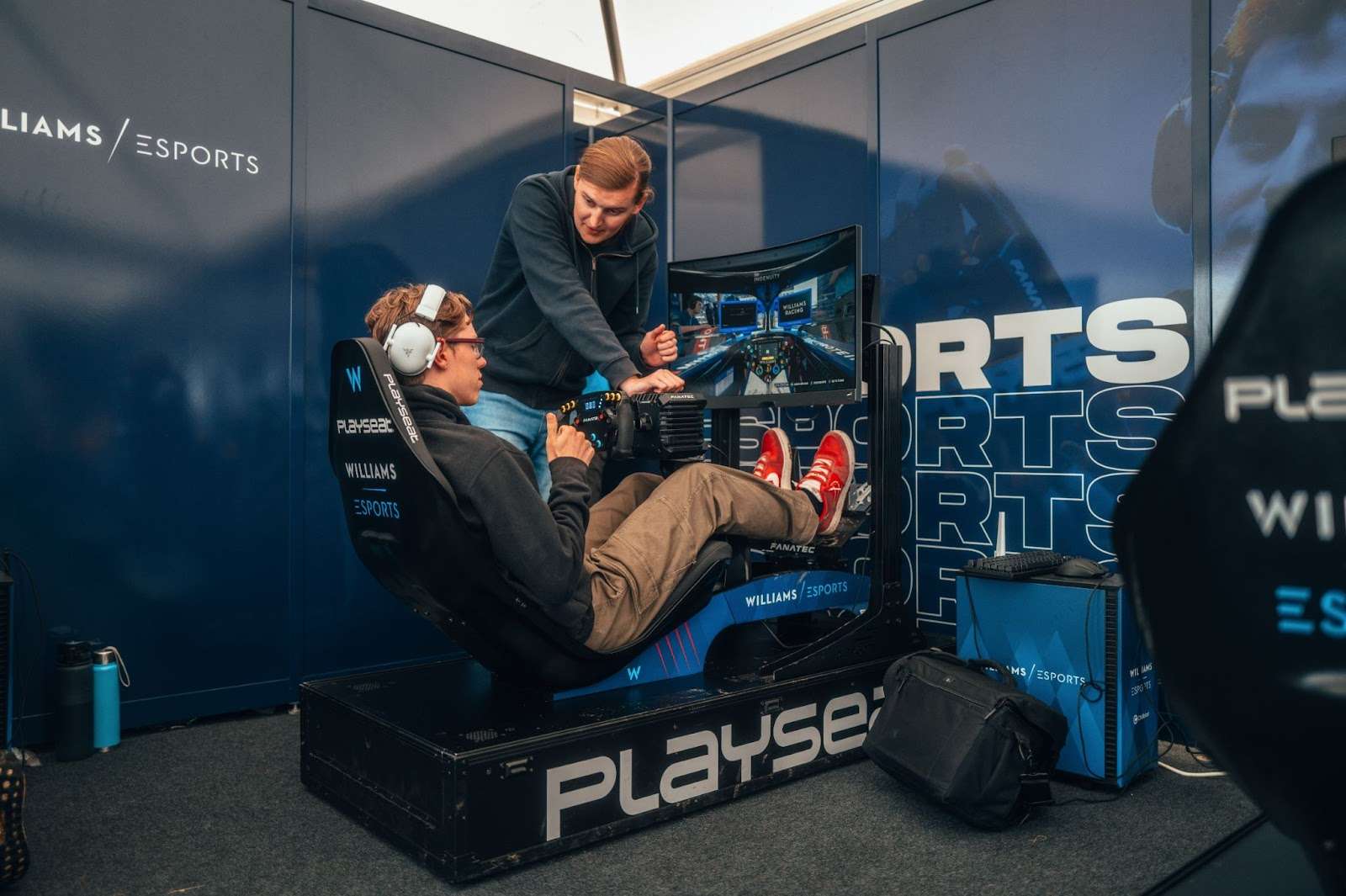
Image Source: SimStaff
This kind of structured approach isn’t theoretical. It’s exactly how major esports series like the F1 Esports Championship operate. At the top level, all assists are completely disabled. Drivers race with manual gears, no ABS, and no traction control; every decision is in their hands. Earlier stages of the competition may allow a few aids to help newer players compete, but those supports are gradually removed as the stakes rise. It’s a deliberate system that maintains a consistent playing field while encouraging skill development.
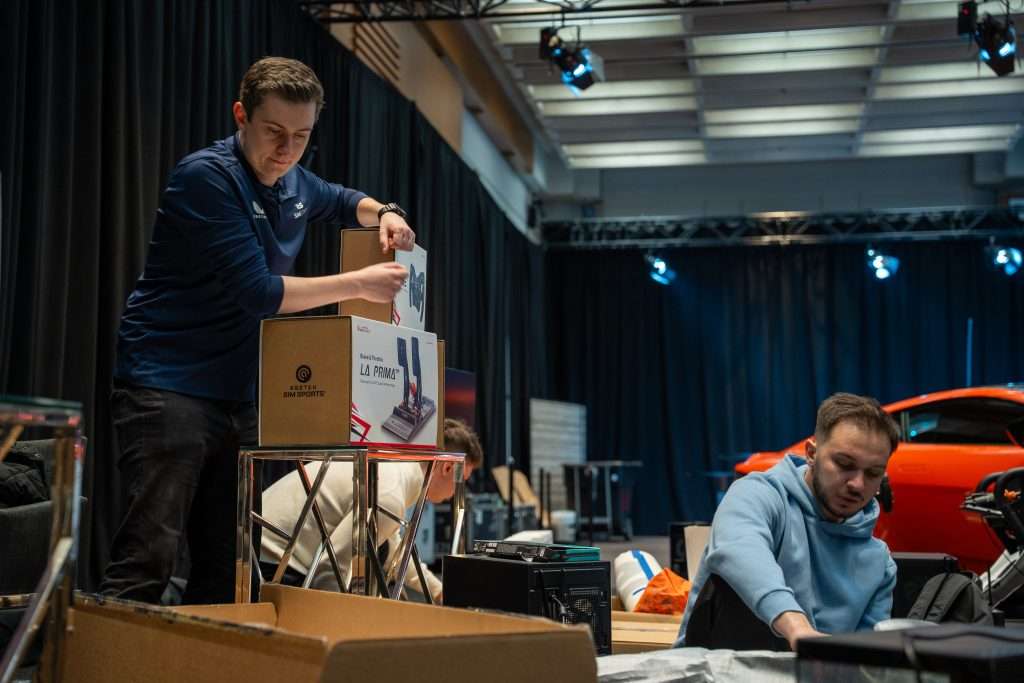
Getting these technical decisions right takes time and expertise. Assist rules, car setups, input devices, and driver briefings all need to work together. That’s why many organisers bring in support from experienced sim racing technicians to balance performance and make the entire experience feel smooth and fair for every participant.
Need help balancing your sim racing event? Get in touch with us. Our team works with event organisers to handle assist rules, hardware setup, and everything in between. No matter your experience level, we’ll help you deliver an experience that feels professional, competitive, and keeps every driver engaged.