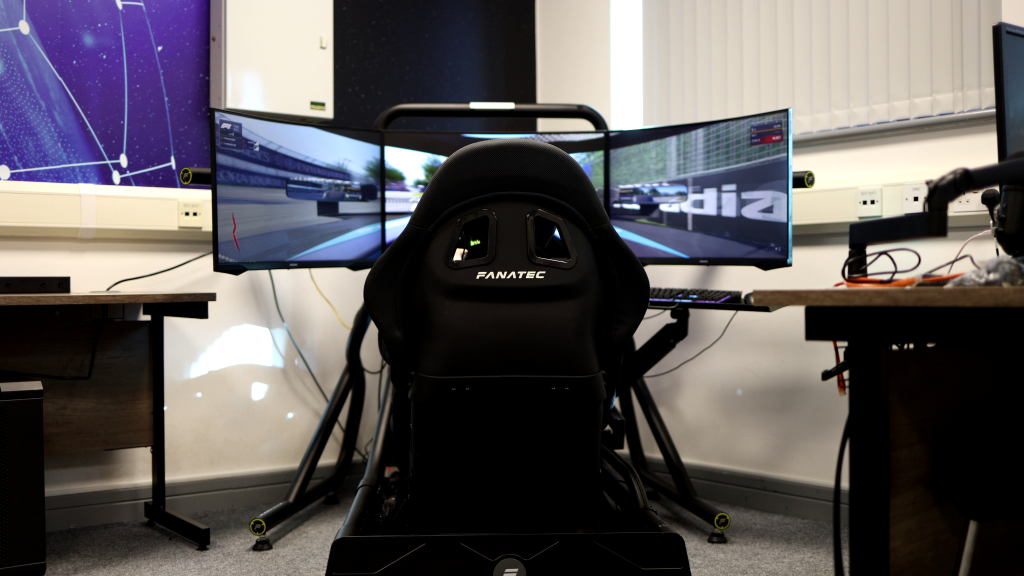
While drivers, commentators, and organisers take centre stage at a sim racing event, the truth is there would be no event without the technicians. They’re the minds and hands behind the high-tech rigs you see. Not just that, they’re also in charge of making sure software runs smoothly and troubleshooting it in case of any issues. All in all, these professionals are a huge contributor to the immersive and problem-free experience that racers and audiences get to have.
In this article, we explore why skilled technicians are super valuable at sim racing events, break down their roles, and give you a couple real-world scenarios where their expertise has saved the day.
Why Technical Expertise is Key in Sim Racing Events

Photo by SimStaff
Sim racing might be virtual, but it’s almost as technically intense and demanding as real-world motorsports. The high-level precision required in these events means that even minor malfunctions can make or break a race.
First of all, sim racing hardware is sophisticated. You have the direct-drive wheels, the high-end pedals, the VR headsets, and of course, the motion rigs. Without expert handling, setting up these components can lead to calibration issues, inaccurate force feedback, or even hardware failures during the event (and nobody wants that!).
Then there are the racing simulators, like iRacing, Assetto Corsa, and rFactor 2. The simulators require a whole lot of fine-tuning to work perfectly with various hardware setups. At SimStaff, we’ve seen our technicians work hard to get the right force feedback settings and input latency adjustments, and still ensure compatibility with third-party software, all of which demand some serious skill.
It’s also no news that esports and online sim racing events in general rely heavily on stable network connections. Imagine you’re about to attempt a daring overtake and your network suddenly disconnects. It is beyond frustrating (and TV screens have been shattered for less, just saying). Technicians can prevent that from happening by testing the connection before the competition and helping to reduce lag.
And, in cases where things do go wrong, technicians are the first responders. That’s why at SimStaff, we always make sure to have these experienced professionals on-site or even remotely available when staffing an event for our partners.
Roles and Responsibilities of Sim Racing Technicians

Photo by SimStaff
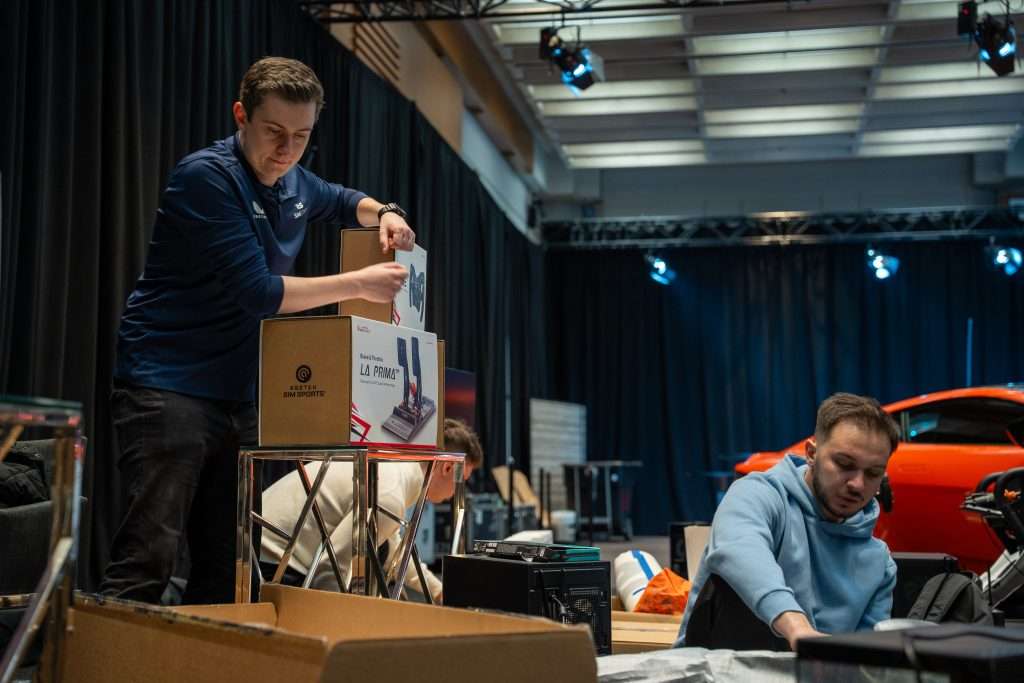
Before the green flag drops, technicians handle everything from setting up racing rigs to software config according to what the event requires. They assemble and calibrate racing wheels, pedals, and motion platforms. On top of that, they also configure force feedback and pedal sensitivity for accurate driver input. After, they set up the VR headsets, monitors, or multi-screen displays.
During the race, their role shifts to real-time technical support. They diagnose and fix hardware malfunctions, resolve software glitches, troubleshoot connectivity issues, and make on-the-fly adjustments to optimise frame rates. Even when unexpected hitches happen, their skills ensure that disruptions are minimal.
The work doesn’t stop even after the checkered flag. The technicians continue to analyse performance and maintain equipment. They inspect hardware for wear and tear, collect data to flag potential future issues, update software and firmware, and ensure all equipment is safely packed and stored for the next competition or showcase.
Real-World Examples: Avoiding Pitfalls with Expert Support

Photo by SimStaff
Without skilled technicians, even the most well-planned sim racing events can come undone. Working with a staffing partner can help you get the best pros on your team to make the most of yo for the Imagine a racer at a highly anticipated tournament reporting that their steering feels off just minutes before the start. A skilled technician can quickly check the calibration, identify some misalignment in the settings, and immediately make the necessary adjustments on the spot.
Software crashes may happen too. A participant’s game can crash out of nowhere during a tournament round. Here, a technician may investigate and find that there’s an automatic background update that’s consuming too many system resources. To prevent any further disruptions, they disable that setting and any other unnecessary processes, all in record time.
It could even be a major online sim racing event where drivers complain of severe lag. In that case, the event’s technical team may see that there’s a server overload issue and reroute traffic to an alternate server to stabilise the network. The most impressive part is that all these repairs happen at lightning speed!
The Backbone of Sim Racing Events
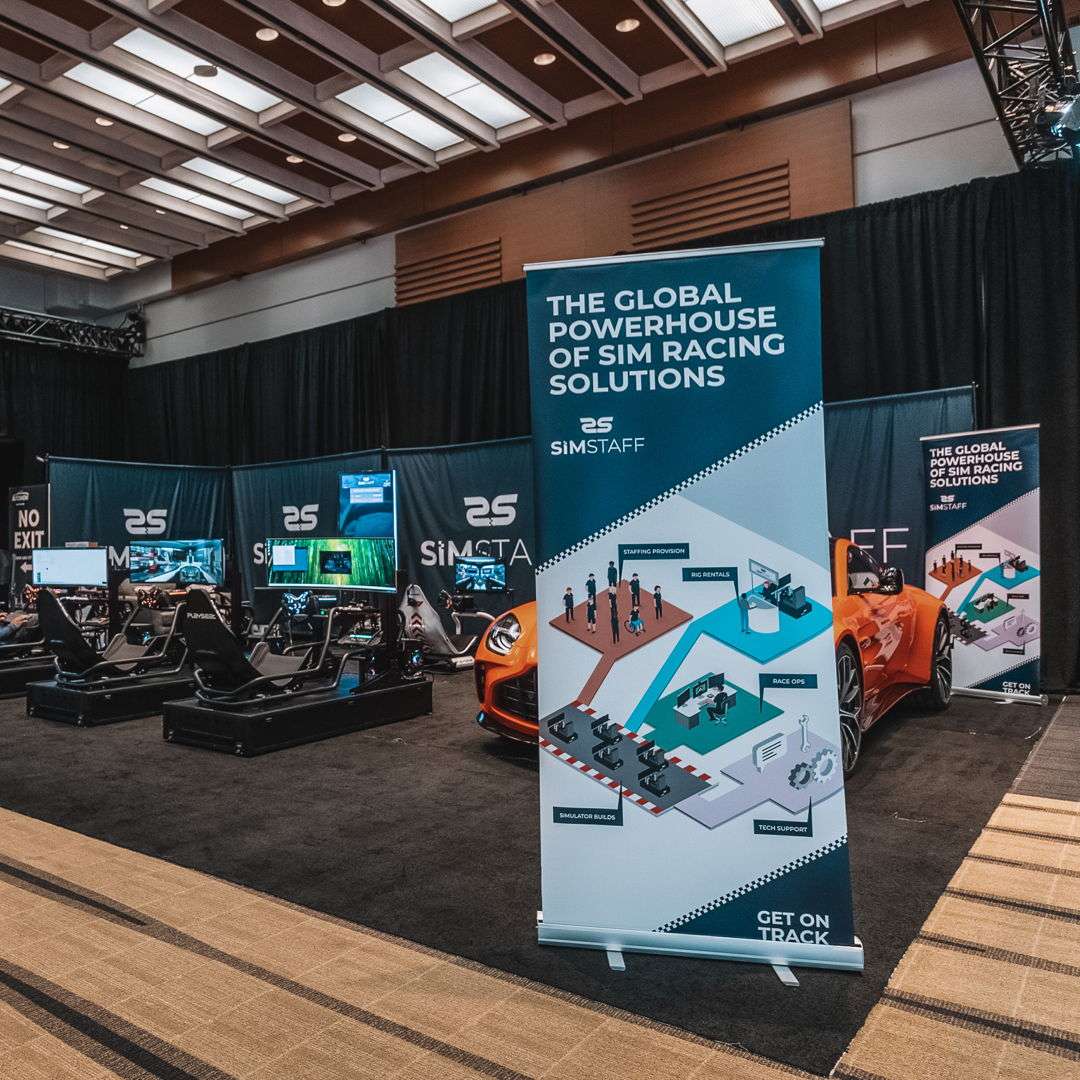
Photo by SimStaff
Skilled technicians are the glue that holds sim racing events together. Their expertise ensures smooth operations and minimises disruptions. Without them, even the most talented drivers and well-organised events would struggle to deliver a high-quality experience.
For organisations looking to host professional sim racing competitions, partnering with experienced technical staff is necessary, not optional. Brands can hire freelance experts or, to make things easier, work with a dedicated sim racing staffing partner like SimStaff. With SimStaff, you get access to a global talent network of not just skilled technicians but also every other professional you need to have a successful event.
When it comes to the high-octane atmosphere of Esports and motorsport gaming, precision and reliability are everything! Having skills is one thing, but using them well under pressure is another, and that’s what makes these technicians so amazing. If you’re a freelancer and think you’ve got what it takes to handle that kind of pressure, you can join our talent pool at SimStaff and get to work with the best of the best.