Most team-building activities fail for one boring reason: they let people opt out.
Escape rooms do it without meaning to. If you’re not a puzzle person, you just stand there. If you’re not loud, you get handed a prop and told to “check that corner.” The team might escape the room, but how people actually work together doesn’t change.
Sim racing doesn’t have that problem. Everyone drives. Everyone gets a lap time. Everyone has a moment where they improve and a moment where the team needs them to deliver.
That’s why competition, done properly, does more for a team than solving riddles in a locked room.
The Most Common Team Building Challenges
Most teams don’t fail at teamwork because they need more “bonding.” They fail because the activity never gets anywhere near the real problems.
Here’s what usually happens with escape rooms:
Low engagement: If the activity only clicks for puzzle lovers, half the room switches off. You can feel it within ten minutes. A few people are into it. Everyone else is just waiting for it to end.
Uneven participation: Escape rooms have a habit of letting whoever talks first run the show. The loud ones make the plan. The quiet ones end up holding props or fetching clues. Nobody planned it that way. The format just makes it happen.
Collaboration that doesn’t stick: Solving a scripted puzzle can be fun, but it rarely changes how people interact on Monday. Actual work is messier. The stakes matter. And you don’t get to wait until the end to find out if you got it right.
No outlet for competitive energy: Adults like challenges. Teams like scoreboards. People like getting better at something measurable. When there’s nothing to measure, attention drifts.
If this sounds familiar, the answer isn’t “find a better escape room.” Gallup’s research found that 50% of employees are watching for or actively seeking a new job, which tells you how easy it is for people to mentally check out.
That’s why you want a format where everyone’s doing something, progress is obvious, and teamwork is unavoidable.
Why Sim Racing Works Better Than Escape Rooms

Image Source: SimStaff
Everyone Competes
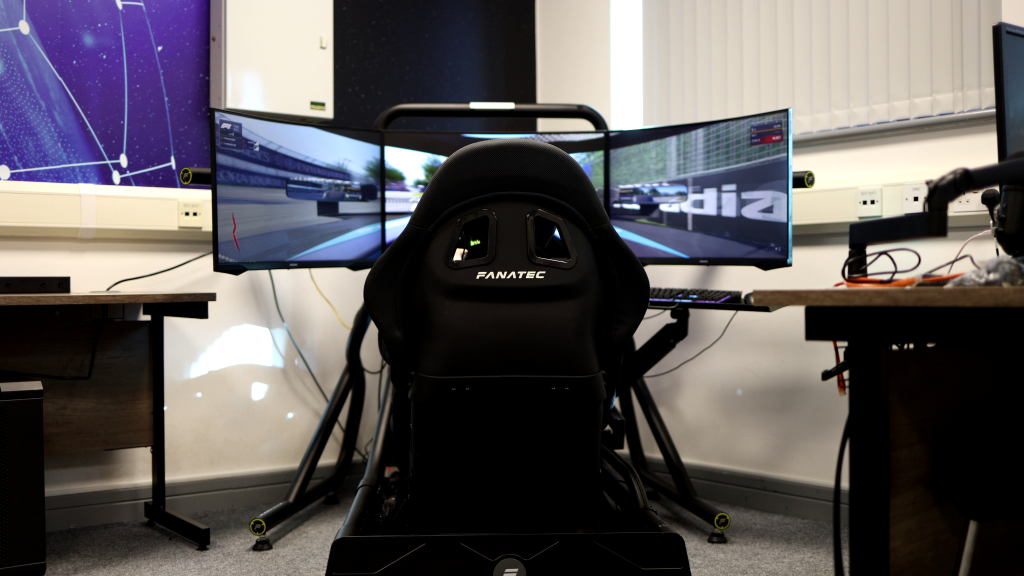
In an escape room, one person can take over while others drift around the edges. In a simulator, everyone has a wheel, a seat, and a time on the board.
You can’t watch your teammate drive for 40 minutes and call that taking part. You’re in the race, or you’re not.
Feedback That Can Be Acted On
In an escape room, you find out at the end. You escaped, or you didn’t. In sim racing, you know straight away. Brake too late, miss the apex, your lap time tells you. Clean up that corner, your time drops. Try again, get better again.
That loop pulls people in. You don’t have to ask anyone to pay attention.
People Stay Locked In
Racing puts your body to work. Hands on the wheel. Foot on the brake. Eyes on the corner coming up. Pressure builds. Momentum matters. Overcook it, and you pay for it.
That’s why people stay focused, even the ones who’d never call themselves car people. It’s hard to zone out when your hands and feet are busy.
Talking to Each Other Because You Have To
Good teamwork happens when people tell each other what they need to know, when it counts. Not when everyone nods along politely while one person runs the show.
Sim racing does that without forcing it. You just need the right format:
- Relay racing: Drivers swap in and out. Teams work out when to push and when to hold back. Someone has to make the call.
- Driver and spotter: One person drives, one calls out braking points, traffic, gaps. Then you switch.
- Team points: Teams pick who races which heat. Who goes for consistency? Who chases the quick time?
None of that feels staged. It feels like actual work. Decisions. Trade-offs. Everyone’s got something riding on it.
Competition That Gives People Something to Talk About
A leaderboard does something escape rooms almost never manage: it gives people stories.
“Sarah from accounts just beat the sales director by two tenths.”
“Two teams tied and had to settle it in the final heat.”
“Someone started dead last, then jumped five places once they figured out the braking.”
Those moments stick – because they happened to you, and everyone saw it.
To stop it from getting spiky, don’t just reward whoever’s fastest. Reward:
- The most improved.
- Cleanest laps.
- Best teamwork in a relay.
- Smartest call on strategy.
That’s how you get proper competition without it turning into an ego trip.

Image Source: SimStaff
How to Run It So It Builds Teams, Not Egos
Sim racing only becomes “the fastest person showing off” if you set it up wrong. Get the format right, and it brings people together.
Let People Find Their Feet First
Give everyone a short practice run before anything counts. Keep it simple: finish a few clean laps without spinning. That’s it. People loosen up fast when they know they’re not going to embarrass themselves in front of the whole office.
Use Formats Where You Need Each Other
Relay stints with driver swaps, shared total time, shared mistakes. Driver and spotter pairings where one drives and one coaches, then you switch. Team points where your fastest driver matters, but so does everyone else.
Balance Skill Without Making It Awkward
You don’t need to announce who’s quick and who’s not. Just set things up so newer drivers can still contribute. Split into beginner and experienced heats. Run brackets so people race others at a similar pace. Reward the most improved alongside the top finishers.
Keep It Fair on the Day
Have someone running the room who knows the format, keeps the energy up, and steps in if anyone starts taking it too seriously. Good competition needs a referee, even when it’s friendly.
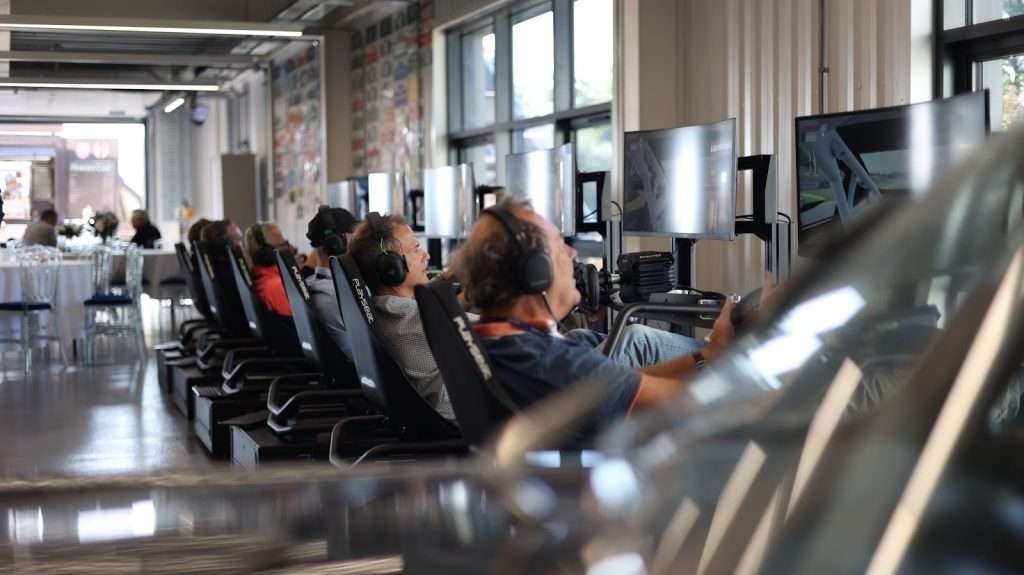
Image Source: SimStaff
When to Call Us
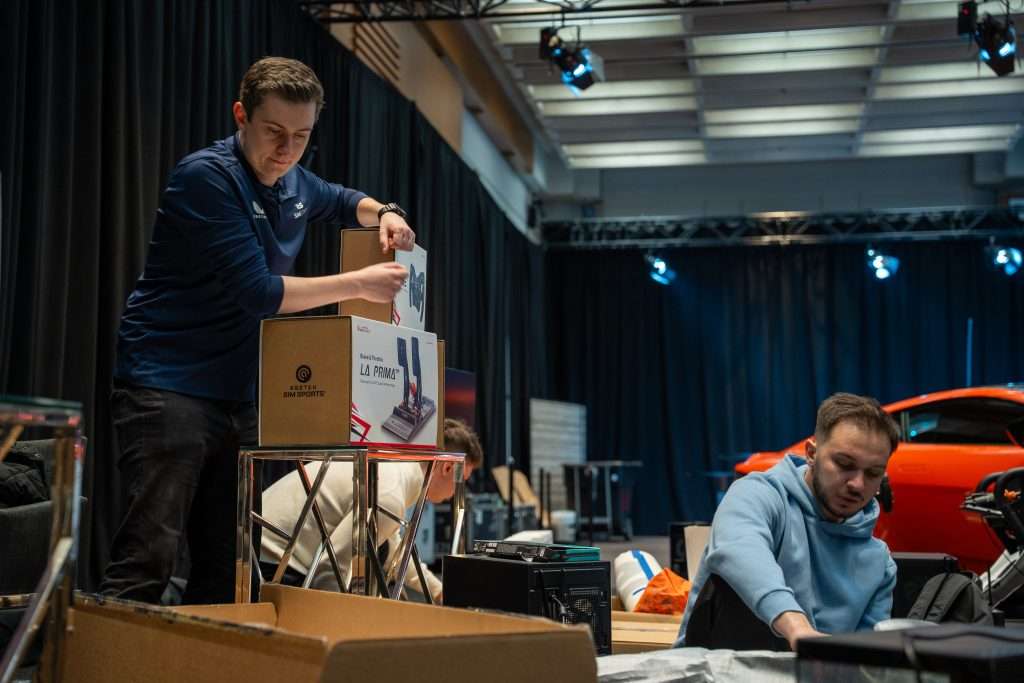
Planning a team day, an offsite, or something different for a corporate event? SimStaff can run the whole thing. We bring the simulators, set up the formats, and run the event with people who know how to keep things moving.
Could be a small session for one team or a proper tournament across the company. Either way, you get something people talk about afterwards. Not just another activity they sat through.
If that sounds like what you’re after, get in touch, and we’ll figure out what works for your group.