Generally, there are two types of input devices are used in professional Esports and sim racing: racing wheels and controllers. However, there are important differences between the two input device types that sim racing event organisers should consider to ensure parity in their events. This guide will explain those differences and help event organisers maintain fairness in professional sim racing.
Controllers vs Wheels: Why Input Choice Matters
While both wheels and controllers can be used with most racing titles and sim racing platforms, fundamental differences between the two can have a significant impact on performance.

Controllers, most commonly in the form of gamepads, offer convenience and accessibility, requiring less setup and effort while driving when compared to a wheel. These devices usually come as standard with popular gaming consoles such as the PS5 and the Xbox Series X and even as standalone items are relatively inexpensive.
Most controller setups follow a similar philosophy when controlling in-game vehicles. Two triggers on the back of the controller are used to control the throttle and brakes, a joystick on the top is used to control the steering and the remaining buttons are used to control other vehicle functions like gear changes, headlights and window wipers.
What controllers gain in accessibility, they lack in precision. While controller haptic and rumble feedback technology has evolved to allow users to feel tyre behaviour, road texture, vehicle impacts, etc (albeit not quite to the same extent as a wheel), the triggers and joysticks fundamentally lack the range of motion required to control an in-game car in an entirely realistic or precise way.

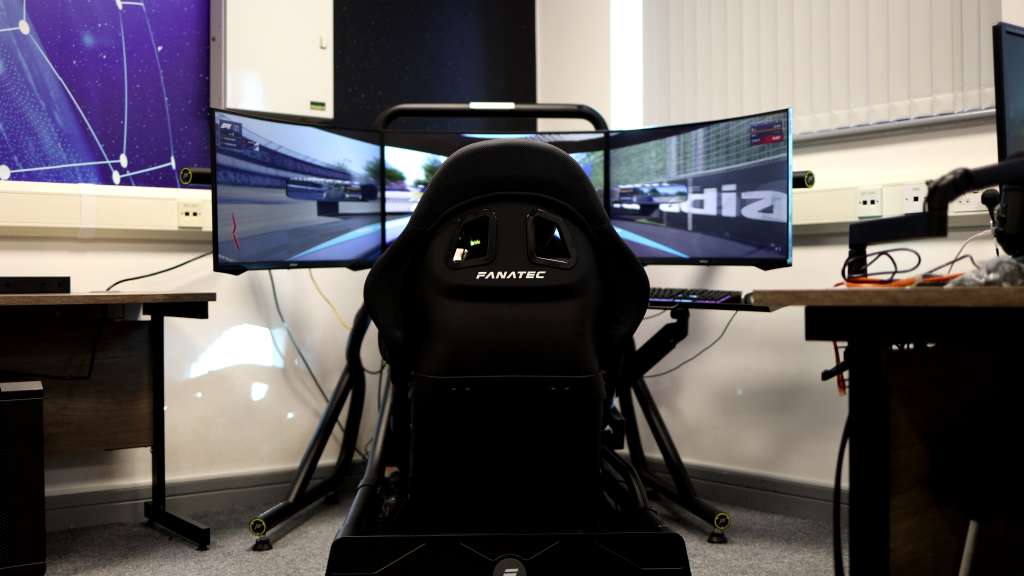
Image via SimStaff (Aviemore Kart Raceway Install)
Racing wheels, on the other hand, are designed to emulate the experience of driving a real car. Vehicle controls are handled through realistic inputs including a steering wheel, pedals and occasionally auxiliary devices such as shifters and handbrakes. Feedback related to such characteristics as car and tyre behaviour, steering weight and surface texture is provided through the steering wheel via a gear, belt or direct drive motor system. Racing wheels can be purchased through companies like Fanatec and can range in price from affordable, entry-level wheels for a few hundred dollars or several thousand for a professional-grade wheelbase.
Racing wheels allow for realistic and precise inputs, meaning that sim racers can drive in-game vehicles as they would a real car. For example, controllers are only capable of turning left and right with a joystick, but many racing wheels are capable of 900 degrees of steering wheel rotation. Realistic pedal setups also allow drivers to take advantage of more precise throttle and brake control compared to the triggers on the back of a controller. Furthermore, the greater amounts of feedback from a wheel allow drivers to be more confident in their in-game vehicles and more consistent. While racing wheels are more expensive, require more setup and are subsequently less accessible than a game controller, they are generally the more competitive option.
The differences between wheels and controllers when it comes to professional sim racing can create competitive imbalances that need to be addressed by organisers.
The Fairness Challenge for Sim Racing Event Organisers
Ideally, sim racing event organisers should seek to create events that are mainly centred around driver skill. However, the type of input device/s used, be they racing wheels or controllers, can significantly impact an event’s fairness.
Depending on the racing title used, one type of input device may have a significant advantage over the other, simply because that platform was designed around one of the two device types. In some cases, these advantages may be over a second per lap, making device parity difficult to achieve.
This disparity may not just apply to the input device type, but also the make and model. For instance, one type of wheel may provide more precise feedback than another, allowing a driver to be more consistent and therefore creating another unfair advantage.
Certain drivers may also be more proficient at using one type of input device over another. For example, if a driver qualified for an event on a controller, they may be uncompetitive if they are required to compete using a wheel on the day of the event.
Without clear rules or measures taken to ensure input device parity, organisers run the risk of frustrating their competitors and compromising the integrity of their sim racing event.
Ensuring Input Parity In Competitive Sim Racing

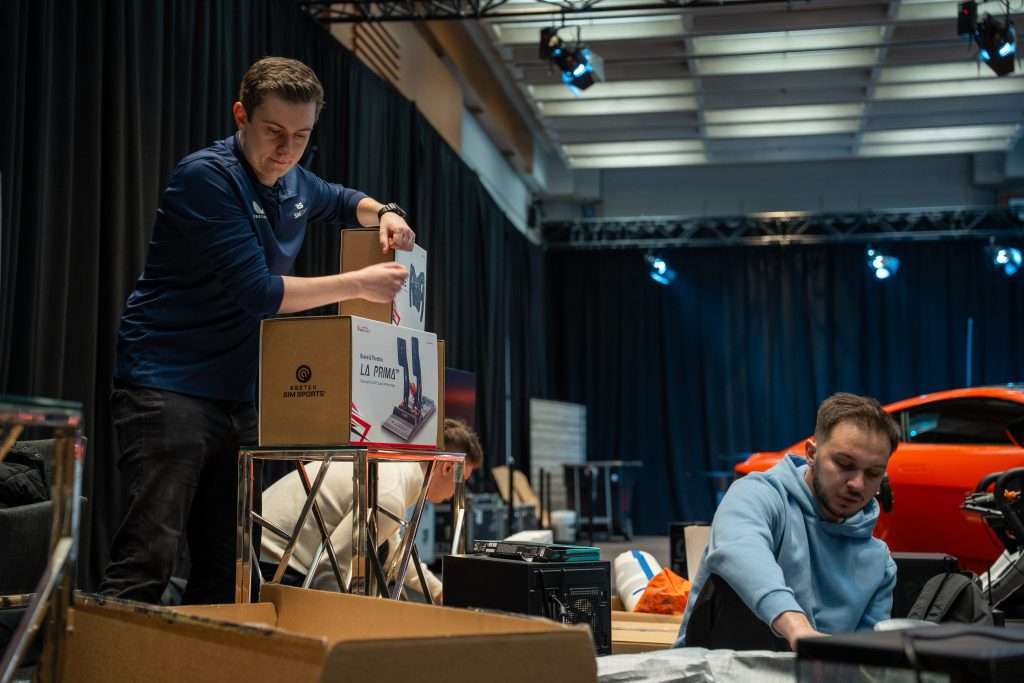
Image via SimStaff (Autosport 2024)
Sim racing event organisers can take measures to ensure fairness in their events when it comes to device parity.
Where possible, organisers should seek to standardise the input device, particularly at in-person events, such as the F1 Esports Series, where all of the drivers are competing in the same place. In other words, the same equipment should be used by every driver, therefore no one can gain an advantage by using a theoretically superior device.
Another way to ensure fairness is simply by creating separate wheel and controller categories, allowing sim racers to compete on a level playing field with the device type that they are most proficient in. This will most likely be an effective means of levelling the playing field for events that are not in-person.
Organisers should also seek to communicate these rules, mandates and categories in the event regulations. This will help prevent any frustration or confusion among competitors, as all participants will know what to expect when coming into an event.
Conclusion
Ensuring 100% fairness in professional sim racing will always be a challenge, and the use of both controllers and racing wheels at the top levels is one of those challenges. However, through mandating input devices, creating separate categories for controllers and wheels, and by properly communicating rules and regulations, sim racing event organisers can work to ensure the fairness and integrity of their competitions.