Who would have thought Sim Racing could become a powerful tool for educating children? Yet here we are. Thanks to advanced simulation technology, today’s Sim Racing tools have pushed boundaries – offering students an affordable, engaging gateway into motorsport, engineering, and STEM (Science, Technology, Engineering, Math) concepts.
What is Sim Racing, and How Does It Connect to STEM?
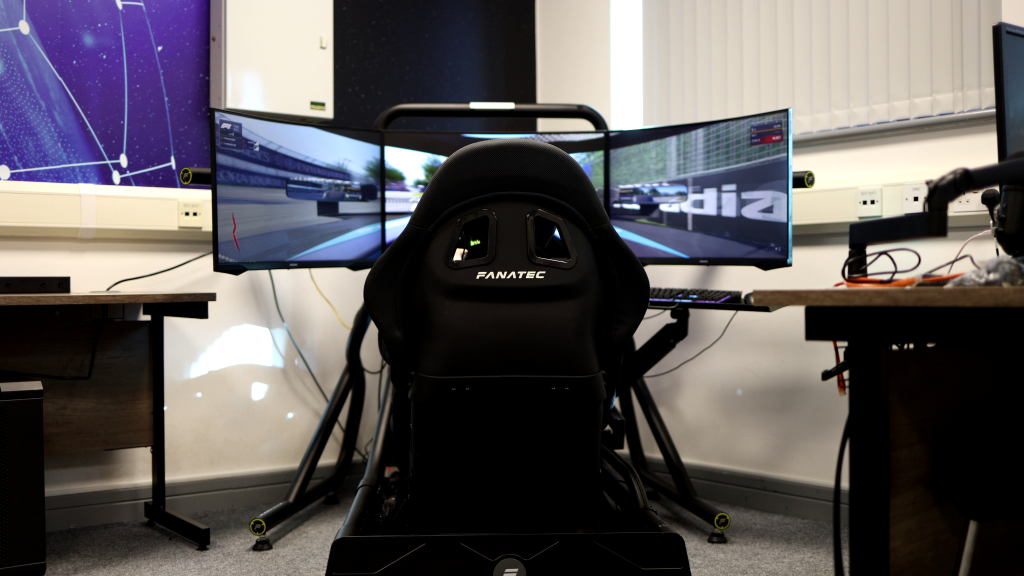
Let’s begin with the basics. Sim Racing is virtual motorsport – racing in a digital environment using specialised simulator equipment. These setups typically include a steering wheel, pedals, gear shifters, and sometimes even a motion rig that mimics the physical sensations of driving a real race car. All these components connect to a computer running racing simulation software. On-screen, drivers see a virtual cockpit view—just like looking through the eyes of a real race car driver or via an onboard camera feed.

Image Source: SimStaff
Compared to the costs and risks of driving an actual race car, simulators are budget-friendly and infinitely safer. Even affordable entry-level gear can offer an excellent experience. Professional-grade setups can be highly sophisticated – featuring motion rigs that replicate suspension movement, bumps, and vibrations on track – adding yet another layer of realism.
Immersion and Realism Drive Learning
Beyond safety and affordability, what makes Sim Racing truly special is its exceptional sense of immersion. Modern racing wheels come equipped with force feedback – allowing drivers to feel the subtle resistance and vibrations from the car. Seats often incorporate vibration actuators – transmitting sensations from bumps, curbs, gear shifts, or tire slip. The realism is further enhanced by highly accurate physics modelling within simulation software – replicating how cars behave under different conditions, such as varying track surfaces, weather changes, or mechanical wear.
This realism sparks curiosity. Users naturally begin to wonder how different driving inputs affect a car’s behaviour. They start thinking about extracting maximum performance from their virtual cars – exploring concepts like the racing line, vehicle stability, and handling characteristics.
Sim Racing Bridges Fun and STEM Learning
One of Sim Racing’s greatest advantages is its crossover appeal. It blends the fun and engagement of video games with complex scientific principles, making it an excellent tool for attracting students who might not initially gravitate toward math or science. Because it’s interactive and enjoyable, Sim Racing can help make abstract classroom concepts tangible and relevant.

Image Source: SimStaff
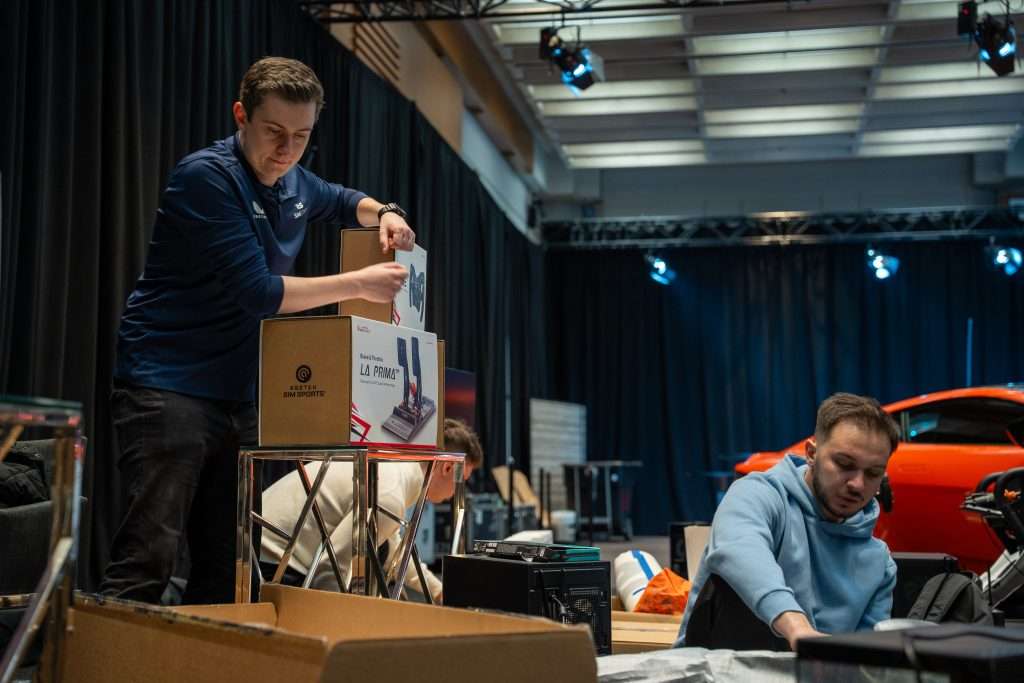
Even the simulator hardware itself is a marvel of engineering and technology. For many students, the mere experience of sitting in a racing cockpit can ignite an appreciation for how engineering and passion – combine to create real-world innovation.
Discovering Real-World Technology and Applications
Imagine you’re racing in a simulator and find that your competitor – driving the same virtual car – consistently reaches higher top speeds or completes a one-hour race without a pit stop while you cannot. Naturally, curiosity kicks in. You research online or talk to experts and discover that countless settings – like aerodynamics, brake bias, tire compounds, ride height, and more – affect car performance.

Image Source: Driver61
Suddenly, you’re learning about aerodynamics, mechanical grip, weight distribution, tire behaviour, and race strategy. You start grappling with the trade-offs involved in each adjustment, turning your virtual racing hobby into a complex optimisation problem involving numerous variables. Along the way, students also apply various mathematical and scientific concepts – whether it’s geometry for understanding racing lines, trigonometry for cornering calculations, calculus to analyse rates of change in speed or tire wear, or statistical skills for interpreting telemetry data. These explorations lay the groundwork for understanding race car engineering, blending physics, mathematics, modelling, and even coding. When students apply classroom knowledge to improve their virtual racing performance, they see immediate, measurable results – a powerful motivator for learning.
Diving Deeper: Telemetry, Modding, and Advanced Skills
For those who wish to take it further, Sim Racing introduces users to telemetry analysis. Drivers compare lap times and detailed data traces to identify mistakes and optimise performance. Students learn how to interpret complex graphs – showing tire temperatures, speed profiles, steering angles, acceleration data, and much more. They begin to understand how real-world racing engineers use similar data to tune a car for each track, manage race strategy, and perform under pressure.

Image Source: Sim Racing Telemetry
At a more advanced level, enthusiasts dive into creating modifications (“mods”) for the simulation software, developing custom tracks, race cars, and setup options. This opens doors to digital engineering, software development, and even machine learning. For instance, students can use telemetry data to build predictive models or simulate engineering theories they wish to test.
Sim Racing also offers opportunities to create educational content. Students can produce videos, tutorials, or blogs showcasing engineering concepts within Sim Racing, helping them build communication skills and confidence in presenting technical topics to a broader audience. These skills mirror those used in high-performance motorsports and various STEM careers, equipping students for future success.
Making STEM Learning Exciting and Accessible
Classroom learning doesn’t have to be dull. In today’s world, we must seek creative ways to connect textbook knowledge to real-world applications. Hands-on, engaging experiences like Sim Racing leave lasting impressions – and break down mental barriers students often have toward technical subjects.
Sim Racing promotes inclusivity – allowing physically challenged students to engage with motorsport and STEM in a virtual, accessible environment.
Sim Racing setups are more accessible than ever, with equipment available for purchase or rental and plenty of online tutorials and community support to help beginners get started. Schools can begin by adopting professionally designed, turnkey racing simulator solutions into classroom environments or educational programs. It is a fully assembled setup, that’s ready to plug and play. Additionally, partnerships with Sim Racing equipment providers can help support educational initiatives – reducing costs further.
Ready to fuel your students’ STEM curiosity? Consider bringing Sim Racing into your school today and witness learning shift gears.