The Love for Sim Racing
All of us here LOVE simracing, that’s no secret. However, not only is it still a relatively small niche among esports in general, but it’s also shown disrespect in the wider motorsports community.
To bridge this gap, we can start by eliminating two key four-letter words from our conversations: “Real” … and even worse: the F-word: “Fake” (or Virtual).
Not only will you not hear me use them during broadcasts because I strive to maintain a clean and semi-professional tone suitable for all audiences, but mostly it’s because it’s pretty disrespectful.
The Origins of Disrespect
So, why do we encounter these four-letter words in the first place? They often stem from a general hangup surrounding esports, you know, the Boomer idea of ‘kids in their bedrooms wasting their time’ – but it’s also a bit of punching-down from on-track motorsport too. There’s an element of elitism that pervades on-track motorsport, as it frequently caters only to the top 5% of earners, and limits access to those fortunate enough to live near racing tracks and infrastructure.

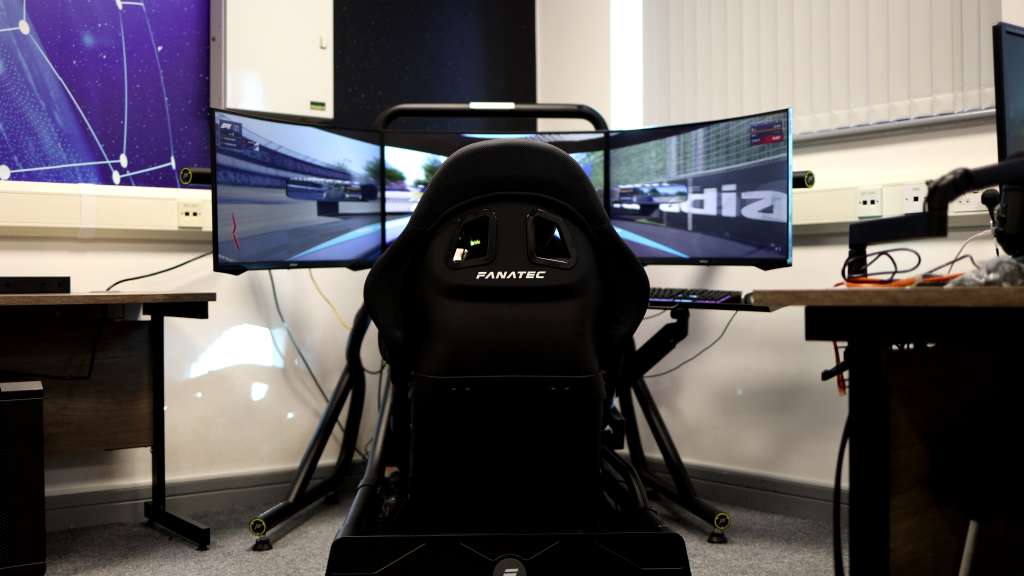
In contrast, sim racing deserves equal respect because it closely mirrors traditional motorsport in terms of the skill set required. For the most part, esports are played on controllers and keyboards without haptics or physical exertion – while sim racers mimic the exact conditions of a cockpit with ever-increasing forces and motion that can be as much of a workout as track drivers experience. Additionally, one of the standout advantages of sim racing is that it allows a far broader demographic to participate, significantly thanks to its reduced cost of entry. But also;
Accessibility and Diversity
Fully customisable controls enable individuals with physical limitations, illnesses, or past injuries to compete, eliminating barriers related to upper-body strength, adding much-needed diversity to the community and sport in general.
Major crossover stars such as ‘Jann Mardonborough’ (Gran Turismo), ‘Lucas Blakely’ (see Race of Champions 2024) and many more have proven that you can go from the sim to the track, not even to mention:
Recently crowned 4 time world champion, ‘Max Verstappen’ races both and owns arguably the top team, plus at least 80% of the current F1 grid have high-end rigs at home or even on their private jets!

The Professional Landscape
The burgeoning world of sim racing has even surpassed traditional platforms in many ways; I genuinely believe you will find more full-time, living-wage -earning professional drivers now in esports than on-track. Every major motorsports on-track team from F1 to NASCAR have now embraced sim racing and have their own sim racing divisions with more salaried drivers than their physical counterparts, not even counting sim-only teams with huge corporate sponsorship.
Unique elements of sim racing, such as the ability to utilise fantasy or historic tracks, switch locations seamlessly within a single broadcast, and even simulate illicit racing conditions, further enhancing its appeal. Not to mention, the racing is closer and, most of the time, actually better!
Safety and Sustainability
As a fan who has witnessed live tragedies, I cannot underestimate the significance of safety in sim racing; no one is going to die due to a sim racing incident. While minor injuries like wrist strains and broken wrists occur, the overall risks are substantially lower.
And finally, in an era where we have a world needing to focus on sustainability more than ever, sim racing stands out as a greener alternative, free from the limitations of noise and emissions that plague traditional on track racing; Although I must say as one of my youtube viewers commented – their partner curtails the volume quite often!
In that sense, it’s time to show your love, get on-board and stop saying the F-word… because you could say, sim racing is like garlic-bread: it’s the future: I’ve seen it!