With the exploding popularity of Formula 1, more people than ever have only imagined what it feels like to drive a real race car. For most, that experience has traditionally remained confined to the screen, and for the most part, arcade games have often brought players closer to it. Even though their simple, accessible game design and eye-popping visuals make them real crowd-pleasers, when the goal is to create a lasting impression, a more immersive approach is far more powerful, especially for brand activation at events.
While driving a virtual race car in an arcade cabinet may be easier and simpler to set up and operate at an event, it cannot match the entertainment value of a true-to-life experience delivered by a professional-grade racing simulator. In this entry, we explore why full-scale simulators offer a deeper, more memorable experience and why that difference justifies the higher investment.
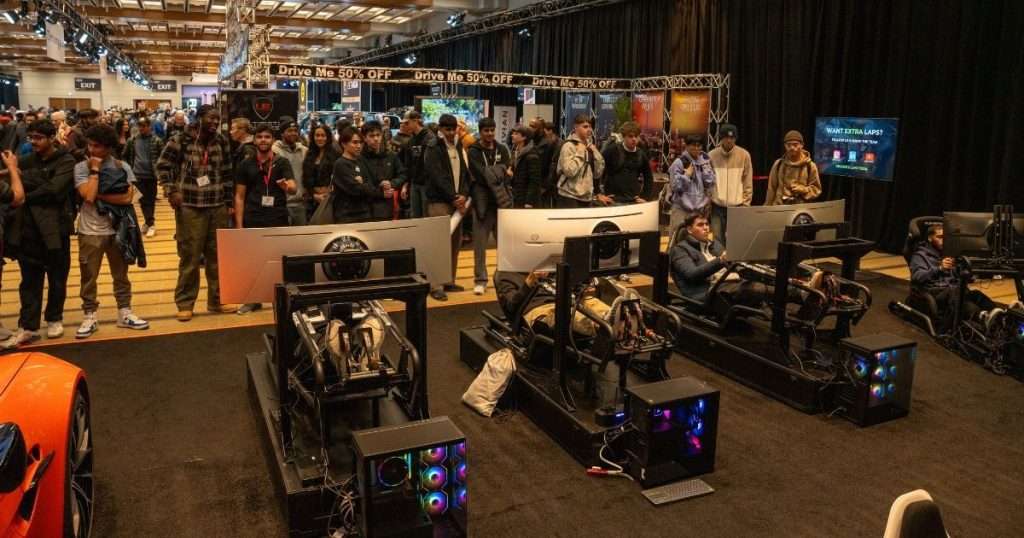
Photo by SimStaff
The Key Differences Between Arcade Racing Games and Simulators
Fundamentally, as their names suggest, arcade racing games and simulators occupy opposite ends of the realism spectrum and serve very different purposes. From a game design standpoint, arcade racers offer easy-to-access handling and physics, making them generally easy for most people to pick up without much preparation. In this genre, the ‘game feel’, a term coined by Steve Swink to describe the experience of control and responsiveness between player input and on-screen action, is carefully tuned to keep the player moving forward at high speeds almost all the time. Steering inputs are simple, grip levels allow for perfect control, and feedback is immediate. Hitting barriers on the side of the track or road will not cause a crash, as bobsledding along the edges of the driving stage is often a valid strategy to maintain momentum or avoid obstacles. In many of these games, the brakes function more like a brake-to-drift button than an actual braking mechanism, and going sideways often rewards the player with a speed boost. Seeing a car travel perfectly straight is often the exception rather than the rule, as the handling model is tuned to deliver easy, satisfying gameplay, with exaggerated driving as the main allure.
In most arcades around the world, the genre typically takes the form of full-scale licensed arcade cabinets such as OutRun and Sega Rally, or, in the most ‘arcadey’ iterations of the genre, Crazy Taxi, which are fitted with simplified steering wheels and pedals mounted to a cockpit with a full racing seat and speakers. With immersive yet forgiving levels of force feedback and haptic effects, these machines are easy to jump into, with a gentle learning curve, where it is less about learning the driving physics and fundamentals of weight transfer and more about learning the video gamey handling models and their innate logic, fine-tuned for near-instant enjoyment.
Jumping into an arcade machine like this as a sim racer, or even as a real racing driver, often requires significant unlearning. For them, their understanding of real-world vehicle dynamics can clash with the over-the-top logic of arcade game design, sometimes making them worse at the game than players who rarely, or maybe even never, play racing games. This phenomenon also speaks to what a real racing simulator can deliver: a unique experience that fundamentally reshapes how you approach driving. While both experiences draw on a familiar mental model of controlling a car, the simulator leaves a lasting impression not only in the mind but also in the body.

Photo by SimStaff
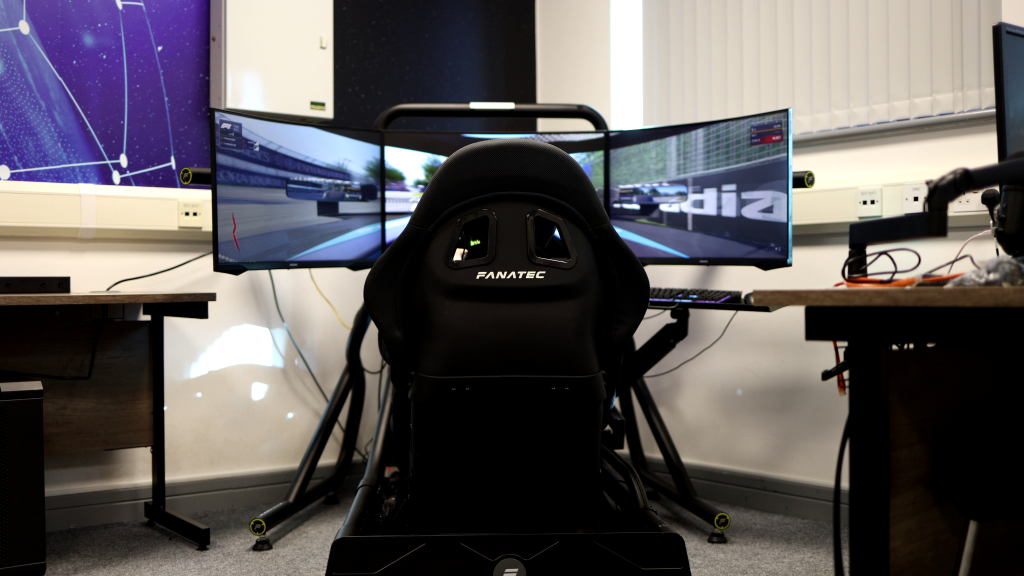
Using motorsport-grade components that mimic real-car systems, with high-fidelity force-feedback wheelbases sometimes capable of delivering up to 39 Nm of force, and hydraulic brakes that feel like pushing against a wall, high-end simulators provide an experience akin to a full-body workout. All this equipment is fitted to a sim rig that replicates GT or Formula seating positions, closely mimicking their real-life counterparts. With single ultrawide or triple-monitor setups, the player’s entire field of view will be enveloped by the game world, closely replicating the sense of speed one would experience while driving a real racecar. When paired with advanced physics models found in games like Assetto Corsa and iRacing, the experience comes as close to real driving as possible. Featuring LiDAR-scanned cars and tracks, everything will be in the proper scale, down to the smallest details, which is why you often see professional racing drivers use them as tools to stay sharp and prepare for real-life events.
In unison, these elements transport the driver to the track, creating the sensation of actually being there. Unlike arcade cabinets, you are no longer aware of the plasticky steering wheel, hair-trigger pedals, or even the fact that you might be standing while using them. Instead, you become immersed in the game world through the rigid, no-flex sim rig, detailed force feedback, and the heaviness and metal markings of the pedals pressing against your feet.
In short, the simulator experience engages nearly all the senses and involves the whole body in a way that arcade cabinets cannot match. Renting professional-grade racing simulators is more costly because of the unique, lasting impression they create. To facilitate this, there’s significant behind-the-scenes activity when working with SimStaff.
Simple Solutions: What You’re Paying For (And Why It’s Worth It)
With the fundamental genre differences clarified, it is time to focus on the practicalities and logistics of the simulator experience. While arcade cabinets are almost as easy to set up as they are to use, arriving as fully assembled, self-contained units, racing simulators require more preparation, greater technical expertise, and careful coordination of both people and equipment.
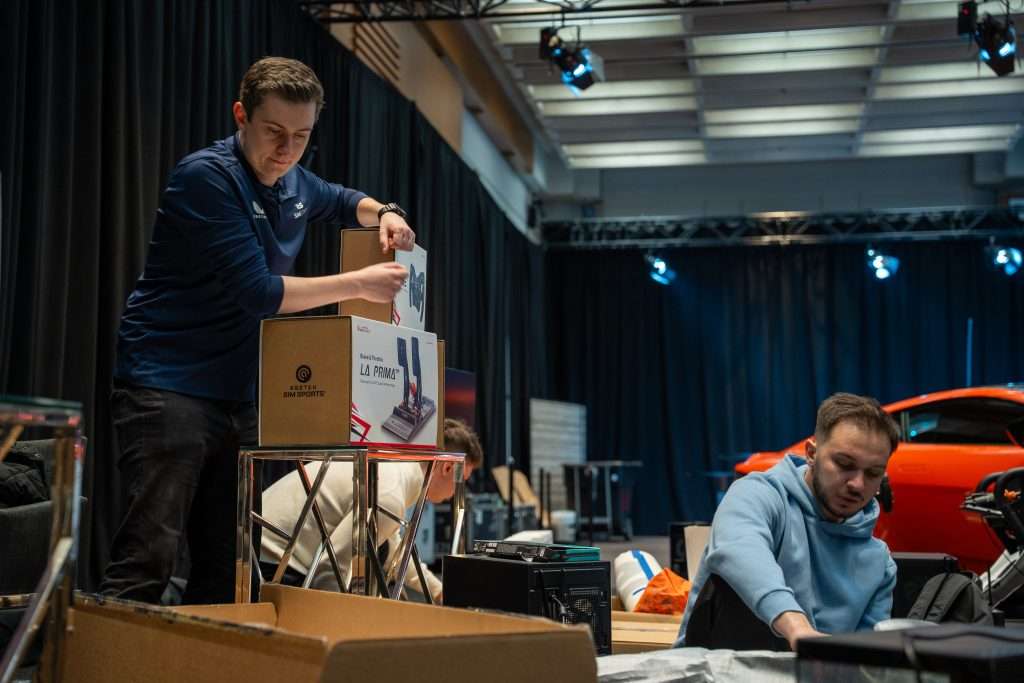
At SimStaff, we specialise in ensuring everything works together seamlessly. Our technicians are drawn from the sim racing community and bring thousands of hands-on hours across multiple simulator platforms. Combined with deep technical knowledge of various hardware and software ecosystems, this expertise enables them to assemble, calibrate, and optimise each rig, actively monitor their performance throughout the event, and resolve any technical issues immediately.
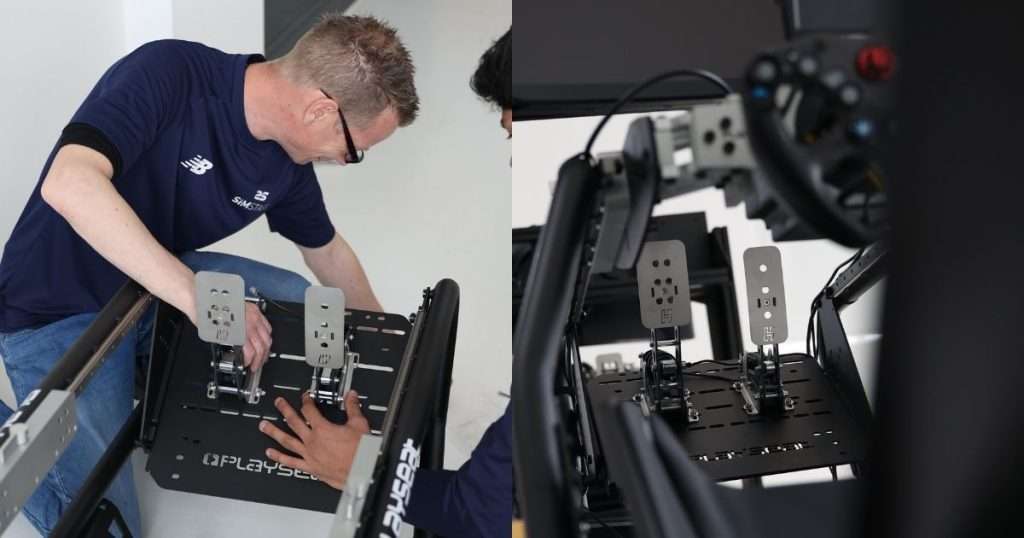
Photo by SimStaff
Compare the setup of a high-end hifi system with that of a high-end racing simulator. There are cables, dials, and buttons to be pushed everywhere, and without the proper expertise, even the best speakers can sound off. In much the same way, tinkering with sim racing gear, beyond the driving itself, can become a part-time job for a hobbyist embarking on the path of perfecting their own setup. What drives the price, then, is all this experience, as well as the efforts that go into the lead-up to the event, when everything is tuned to perfection. The gear and its software are calibrated to work in perfect harmony with the sim-title software, which, in itself, has myriad settings to tweak. Drawing on our extensive accumulated knowledge bank, SimStaff technicians anticipate potential issues, account for venue-specific requirements, and manage transport, installation, operation, and breakdown.
Overall, SimStaff offers an experience akin to a concert, with the same level of preparation, planning, and setup. Support encompasses more than just ensuring the simulators function properly, as it also includes direct assistance to participants, with staff helping event-goers enter and exit the simulators and making ergonomic adjustments as needed. Live driving coaching from trained staff is also offered for newcomers, helping them quickly learn about braking points, racing lines, and basic car control, making the experience less daunting than it first appears.
With event staff managing registration and queues, the entire simulator package offers a unique event experience. Leaderboard rankings, especially in time-attack events, are shown in real time on screens, motivating participants to improve their lap times, sometimes through repeat visits. This results in a continuous flow of lap times, creating an increasingly exciting atmosphere for both drivers and spectators. The energy levels might even rival those of fighting-game arcade cabinets, in large part due to easy-to-understand progress bars like the deltabar and lap-time counters, which are similar to health bars, that highlight the battle’s progress. But unlike fighting games, which pit two players against each other, time-attack racing events pit many players against each other asynchronously, making them highly attractive centrepieces often seen at exhibitions and trade shows, where many attendees experience them both actively and passively.
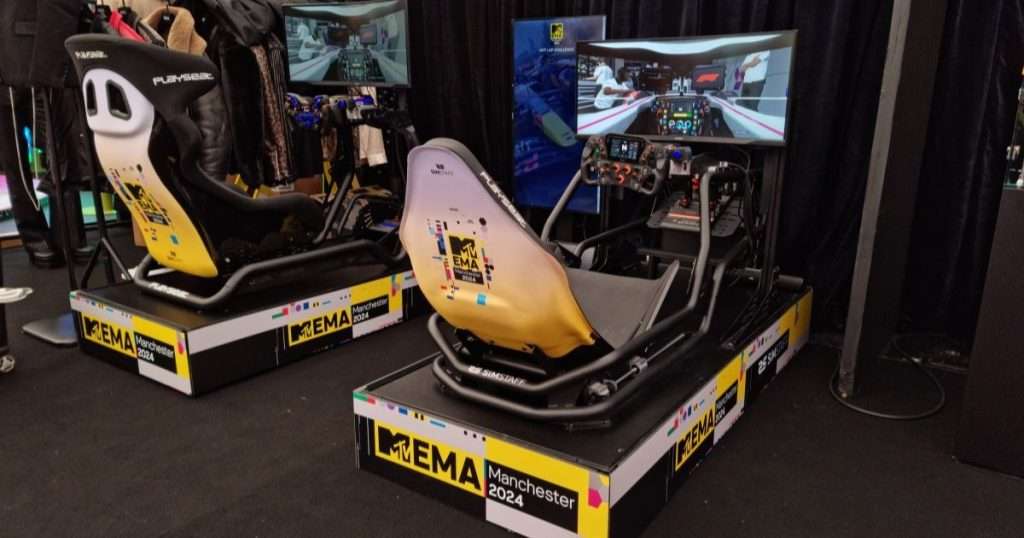
Photo by SimStaff
Modularity in the package customisation is what essentially sets SimStaff racing simulators apart from plug-and-play arcade cabinets. Our simulators come in GT and Formula styles, each designed to mirror its real-world counterpart in ergonomics and visuals. The GT model features a more upright driving position, like that found in road cars and GT racing machines, making it immediately familiar and accessible to most participants. The Formula style setup, by contrast, features a lower, more enclosed seating position that delivers a distinctly “elite” feel and a striking visual impact. Formula rigs can serve as great premium centrepieces at brand-focused activations, while GT setups allow for quicker entry and exit, making them better suited to high-traffic environments where maintaining optimal guest flow is essential.
Further tailoring is available through bespoke chassis wraps, in-game liveries, and branded leaderboard graphics, keeping your branding front and centre across both the virtual and physical worlds. By integrating your visual identity directly into the experience, you make it closely associated with your brand and remembered long after the event concludes.
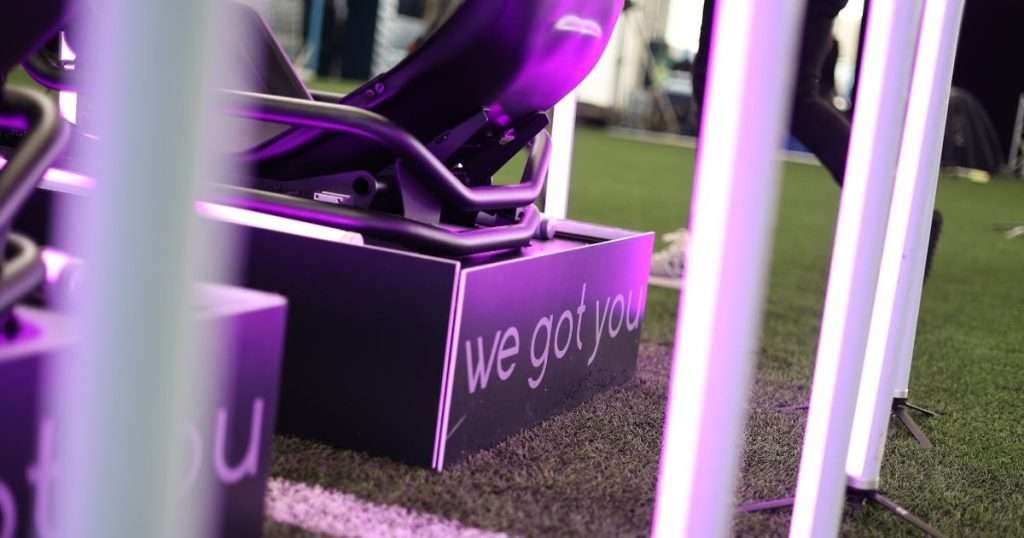
Photo by SimStaff
When to Call Us:
Whether you’re organising a corporate event, trade show booth, hospitality suite, a brand activation, or planning to set up a racing simulator at home, we have your back. Through the whole process, SimStaff provides the expertise and logistical oversight needed to deliver a premium, fully managed experience.
SimStaff offers:
- Professional-grade simulator rentals for events or personal use
- Custom GT and Formula configurations
- Full technical staffing
- Bespoke branding integration and competitive formats
- Event design tailored for maximum impact
- Expertise trusted by brands across motorsport, esports, and corporate entertainment
Don’t hesitate to get in touch with us. Contact us here to get out of the pits and out on the track. With SimStaff as your pit crew, we will have you in pole position in no time!