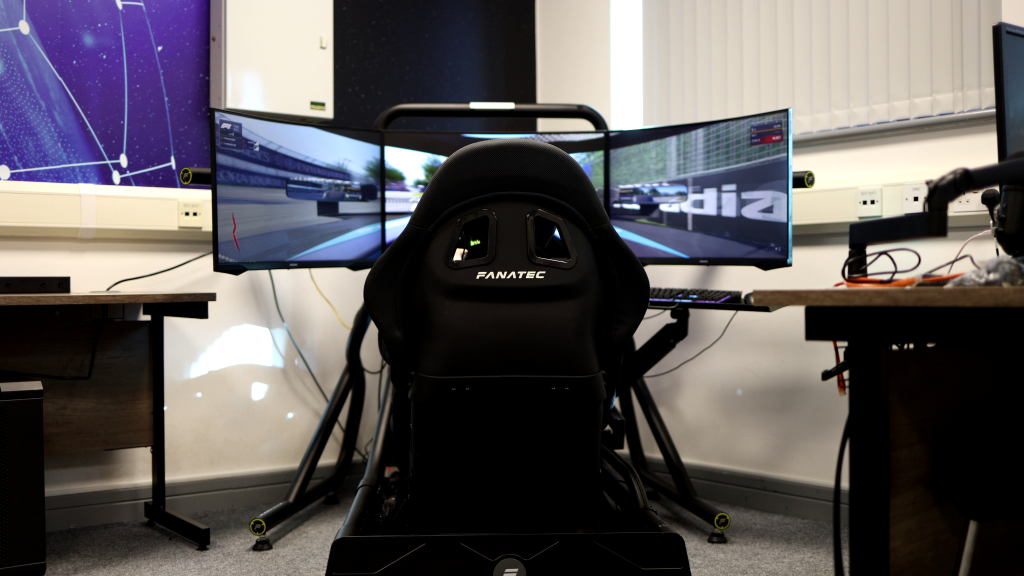
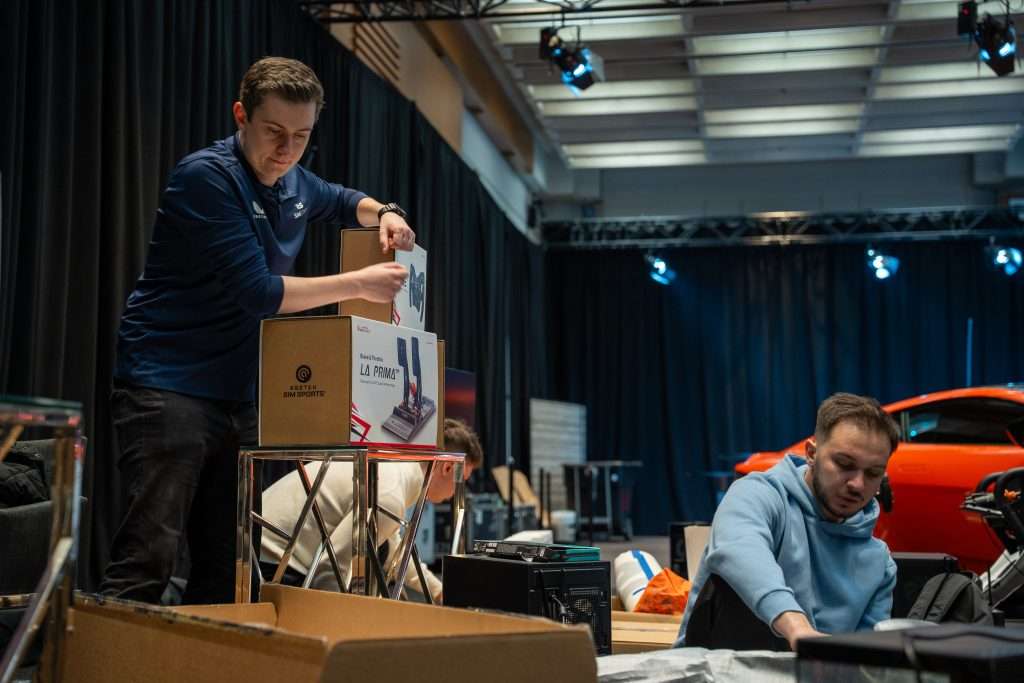
With the soundscape of sim racing being relatively simple and not requiring the level of sound imaging that can provide a significant competitive advantage in first-person shooters, audio often becomes an afterthought. Unlike in FPS titles, where accurately identifying footsteps and enemy positions with a competitive FPS-focused headset can feel like having eyes in the back of your head, sim racing audio is primarily centred around things like engine RPM progression, tyre noise, spotters, and team communication.
For the average sim racer, choosing a headset therefore becomes more about features, comfort, and convenience, alongside good audio, of course, since sim racing is a unique use case with several practical considerations to take into account.

Image by SimStaff
Wireless vs. Wired: Solving the Latency Debate
In the last couple of years, the clash between wired and wireless headsets and which is better has become much more of a matter of specific use cases. Wired headsets, or dedicated wired headphones, should you choose to take the strict audiophile route, offer the highest potential for sound quality, especially when paired with a good DAC, amplifier, or similar audio interface. An always-present pro of wired headsets/headphones, compared to their wireless counterparts, is that you won’t have to worry about charging, battery wear, pairing issues, wireless interference, or latency, which makes them ideal for events, esports setups, and broadcast purposes.
For the home sim racer, wireless latency is much less of a concern. Unlike in competitive first-person shooters, where sound imaging and latency will allow you to pinpoint an opponent’s location before ever even seeing them and thus might be the deciding factor in a match, in sim racing, you don’t have such ‘time-critical’ sound cues you need to react to. The soundscape is much more focused on listening to engine RPMs, learning gear shift timings in accordance with them, tyre noise, spotters, and team communication. And since wireless headsets have improved significantly on latency, it is not as much of a deciding factor as before.
Freedom of movement, absence of cables, built-in game/chat balance dials, software controls, and hot-swappable batteries are all valuable features that have closed the gap in value proposition between wired and wireless products. Wireless gaming headsets might be more expensive, but that premium also brings a streamlined, complete, plug-and-play package that eliminates many of the complications of a wired setup. For home users, these quality-of-life features may very well be worth the possible trade-off in audio fidelity. One of the biggest advantages many can agree on is being able to leave your sim rig without taking off your headset, keeping you connected to voice chat even if you need to step into another room.
Our Top Picks for Long-Stint Comfort
SteelSeries Arctis Nova Pro Wireless
The SteelSeries Arctis Nova Pro Wireless from 2022 is a great starting point. Still, if your budget allows, we recommend the recently released 2026 Pro Omni variant, which offers several improvements and is still cheaper than the 2025 flagship Elite variant released last year. The standard Nova Pro has also been spotted in use by prominent sim racing figures, including James Baldwin and Max Verstappen, which further underlines its continued relevance.
As a baseline, the 2022 model is still a great headset that has appeared in many review comparisons over the last couple of years. For the purposes of this blog entry, we present slightly older first iterations of product series, as they introduce the core user experience and features while also offering options for readers with different budgets. Newer iterations improve on these foundations, but their prices increase accordingly, as is apparent with the new Elite variant, which might cost twice as much in some places as the ordinary 2022 Pro variant.

Images by SteelSeries
As for the Pro variant, with the included base station, you can view current volume levels and the current Chat/Game audio balance. This allows you to adjust comms audio relative to game audio, removing the need to fine-tune audio levels in Windows or your chosen comms app during a race. Being able to adjust this with the dial on the left ear cup is a godsend quality-of-life feature that, once you try it, you can’t go without.
The headset’s smaller 40mm earcups and floating headband also allow for near-perfect fit compatibility with VR headsets like the Meta Quest 3. With the design’s inherent flexibility, the Arctis Nova Pro can fit both under and over the Quest 3, even when paired with the slightly thicker KIWI Design K4 Comfort Strap.
Along with the Chat/Game audio feature—the absence of which would otherwise require you to lift your VR headset each time you need to adjust volume across apps—the base station also serves as a charging station for the two-battery swappable system. This means that you never have to plug a wire into the headset. When the headset alerts you with an audible low-battery cue, you just swap out the battery in the right earcup without even taking off the headphones, allowing you to keep both headsets on at all times. When you have done this enough times, you won’t even have to look at what you are doing with your hands, because it works so seamlessly that you can essentially swap batteries while blazing down the Döttinger Höhe straight, all while staying in VR.
Combined with the wireless nature of the Arctis Nova Pro, the Quest 3’s passthrough cameras essentially let you move in and out of your sim rig without having to take off any headgear. It might look strange to any lucky witnesses, but once you get used to it, you might often find yourself not bothering to remove either device, thanks to the freedom of movement and comfort provided by the fit compatibility.
What further speaks to the ease of use in VR is the simultaneous 2.4GHz wireless and Bluetooth connectivity, which allows the user to channel smartphone audio into the headset sound mix. As many sim racers use their phones as second monitors, this is a valuable feature, especially for nearsighted users with prescription VR lenses who may struggle to read their monitors clearly and therefore rely on their phone as a more readable supplement for comms, content consumption, or other purposes during a VR session. This is also helpful if you need to take a phone call during practice without ever breaking VR immersion. The same goes for those who listen to music while driving, as they can turn their phone into a music controller by tapping the button on the right earcup.
Audeze Maxwell
The Audeze Maxwell headset is ideal for the flat-screen sim racer. Almost every single review of this headset contains the word ‘audiophile,’ and for a good reason, as it boasts huge 90mm drivers that deliver some of the best sound in the gaming headset market. The headset offers great bass across the sound profile, making it ideal for engine sounds and mechanical noises such as gear shifts, all of which reverberate through the cockpit in true-to-life fashion. This is a big plus for the audio experience, as the somewhat repetitive and focused soundscape of sim racing, at least compared to other media experiences, can become quite tedious over time on a lower-end headset. Combined with a floating headband-style fit, the large earcups offer near-perfect comfort.
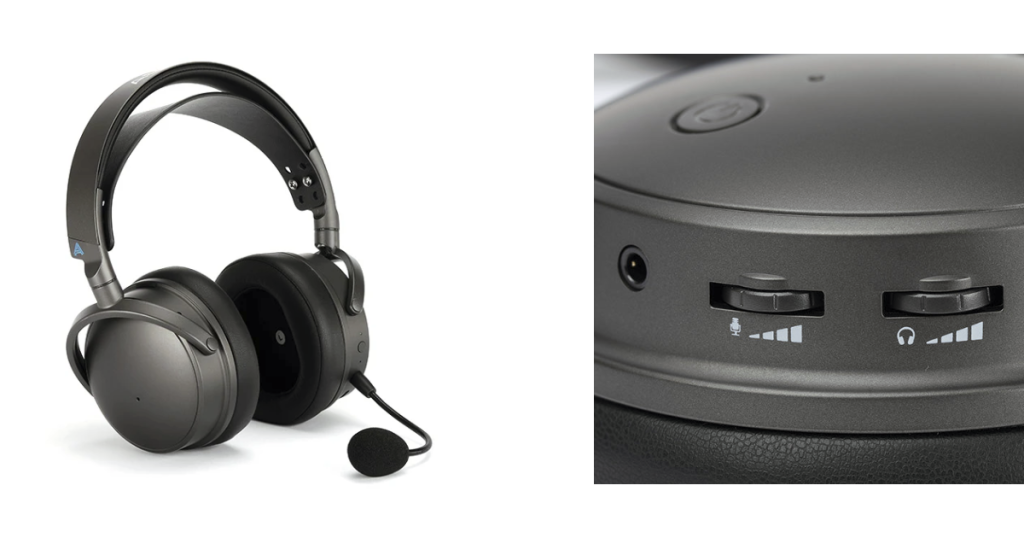
Images by Audeze
While it might not offer a battery-swap system, the Maxwell offers 80-hour battery life, which, compared to a single SteelSeries battery with around 27 hours of lifespan, makes the need for a wire almost unnecessary, as long as you charge it frequently when not in use.
The headset also features a Game/Chat audio balance dial but lacks simultaneous 2.4GHz wireless and Bluetooth audio mixing. In practice, this makes it less suited to users who want PC audio and phone audio running side by side. You can still use Bluetooth for incoming calls when needed, but for users who use the phone as a second monitor, this might hinder simultaneous PC/phone use.
Regarding the microphone, the Maxwell has a clear advantage over the comparatively underwhelming one on the Arctis Nova Pro. While the latter offers microphone AI noise cancellation through Sonar Software, which some might find limiting, the Maxwell uses built-in AI noise cancellation to help filter out paddle shifters, sequential shifters, and wheelbase noise during Discord calls. If you want a better communication experience, the Maxwell wins in this department.
As with the Arctis Nova Pro, the Maxwell headset discussed here is the first iteration of the product released back in 2023. The original version is still mentioned in almost every gaming headset ranking, but for those with the budget, the Audeze Maxwell 2 became available earlier this year, improving on many core aspects of the original headset’s audio experience, microphone quality, comfort, and connectivity.
Audio-Technica BPHS1
While many audiophiles might suggest brands such as Sennheiser, Beyerdynamic, Philips, or HIFIMAN paired with an attachable or stationary external microphone, thereby moving into the true headphone segment, we think the Audio-Technica BPHS1, despite its age, still has a place within the sim racing scene.
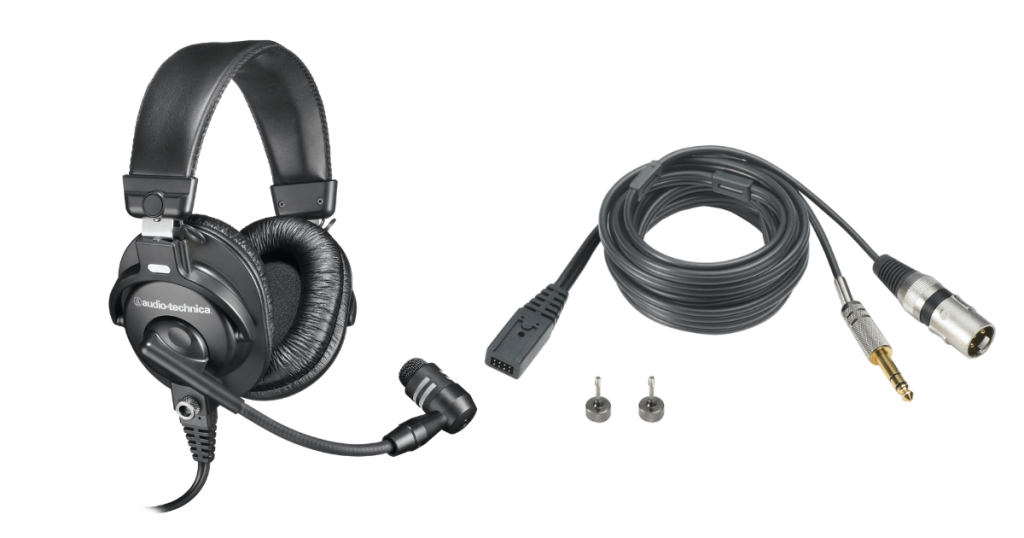
Images by Audio-Technica
For those who still stand by the signal reliability and practical latency advantages of a wired solution, the BPHS1 offers sports-commentator-tier microphone quality, a clear sound profile that is ideal for long listening sessions, and incredible passive sound isolation thanks to its closed-back earcup design. When paired with a suitable audio interface, it becomes a strong choice for drivers who do not want a stationary external microphone pointed at their head while racing. On a compact sim rig, that microphone can obstruct vision, limit arm movement, or, during a sudden slide correction, become an accidental makeshift speedbag, so if you are going all in on voice quality, this is the ideal choice.
At least within the sim racing scene, the headset has been popularised by content creators like ‘GPLaps’ Jake Williams and Jimmy Broadbent, which suggests that just because something is newer doesn’t mean it is necessarily better. As with speakers and amplifiers, for example, some technologies reach a point where the core experience remains highly competitive for years, even as newer products add extra features, build-quality refinements, and convenience.
With that being said, the wired-headphone ‘audiophile’ world is vast, deeply technical, and highly subjective. As a result, what is considered the “best” often depends on personal preference, use case, and the rest of your audio setup. Looking at audiophile review sources that have examined wired, high-fidelity, gaming-focused audio solutions would be a viable route to take. Still, the BPHS1 is included here because of its popularity amongst sim racing content creators, making it an ideal choice for sim racers who want strong microphone quality for comms or content creation.
In the end, the best sim racing audio solution depends on your exact use case, whether that is budget, audio quality, setup compatibility, ergonomics, or signal reliability. We hope this entry has given you insights into which approach to take.
As always, don’t hesitate to reach out to SimStaff for racing simulation solutions. Whether you are setting up a home rig, looking to enhance your brand activation at events, or simply need guidance on what you already have, we are here to help. Reach out to us here!