Ask any event planner what they’re tired of, and overcomplicated setups will probably be high on the list.
Loud, fuel-powered attractions, hours of cleanup, permits for everything from noise to fire hazards, and after all that effort, the experience still feels… outdated.
At the same time, there’s this growing pressure to make events cleaner, better for the environment, and easier on everyone involved. The kind of experience people enjoy without leaving a mess behind, literally or logistically.
That’s why sim racing has started to stand out. It is easy to set up, it fits into sustainable event ideas without sacrificing the experience, and it just makes more sense for the kind of events people want to attend today.
Sim Racing vs Traditional Event Activities

Image Source: SimStaff
A lot of traditional event entertainment still leans on noise, fuel, and spectacle.
There are petrol go-karts, drift shows, even fireworks displays that light up the sky and leave the ground scattered with ash and debris. These things draw attention, but they also come with a long list of headaches, like permits, cleanup, safety plans, and logistical issues.
And the emissions add up quickly.
A petrol go-kart running at full power for an hour can produce as much air pollution as a car that has covered 350 miles. Now, multiply that much emission by 10 karts, add the trucks it takes to transport them, the fuel for generators, and the setup crews, and your entertainment suddenly carries a hefty carbon footprint.
Then there’s the planning load: noise restrictions, insurance, staff, weather concerns, and risk assessments. All of it stacked on top of an already packed schedule.
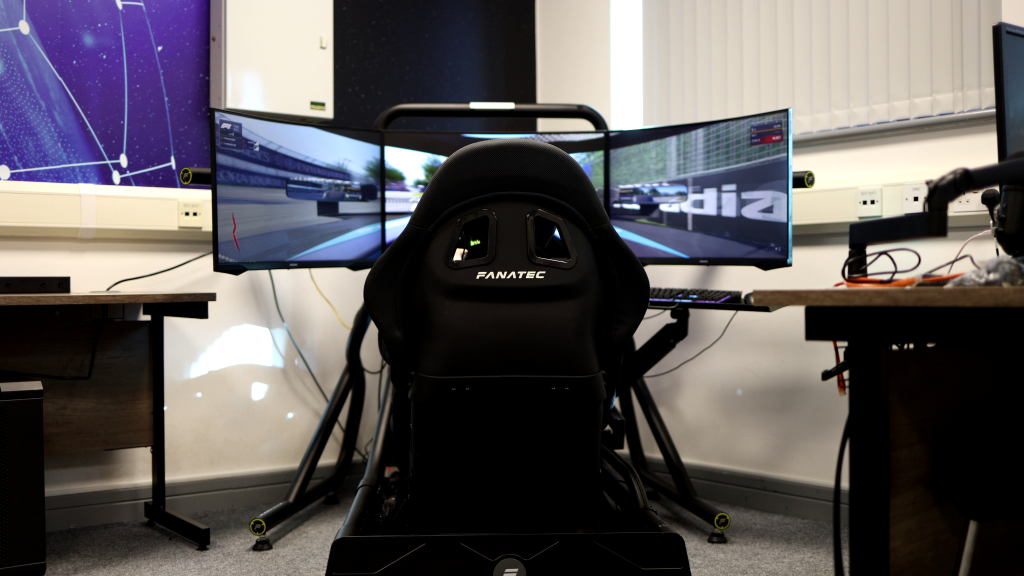
Sim racing flips that setup completely.
You still get the adrenaline. Still get the competition. People sit behind the wheel, go head-to-head, chase lap times, and see their names rise on the leaderboard. But there’s no exhaust, no fuel, and no stress about noise or emissions.
The difference is immediate. No fuel burning through the afternoon. No exhaust hanging in the air. No cleanup crew scrubbing skid marks off the venue floor. Just a rig, a screen, and a race that engages everyone around.
It’s simple to run, easy to manage, and better for the environment by design.
It’s entertainment that gives people a story to tell, without the baggage that keeps planners up at night.
Built-In Sustainability
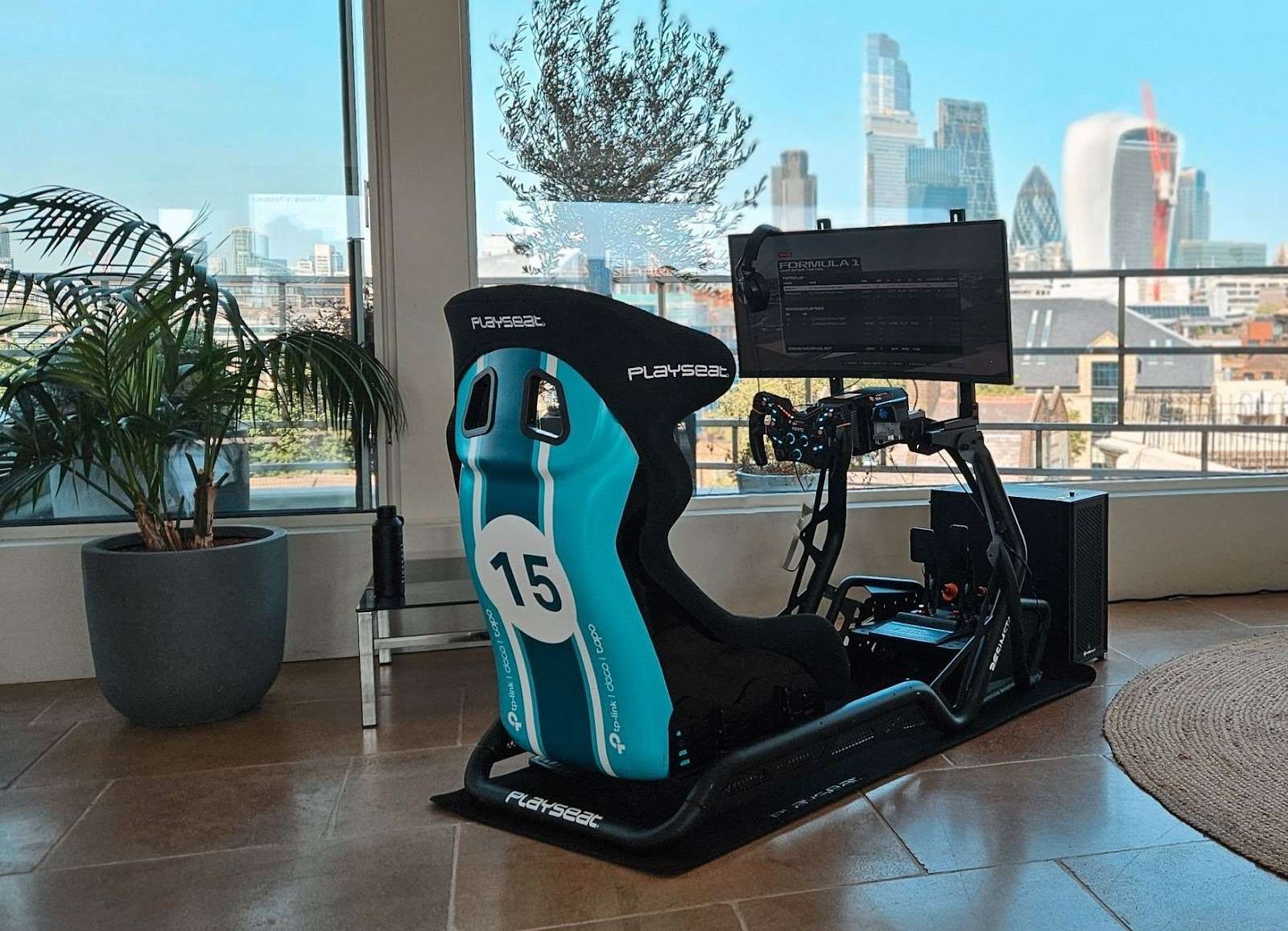
Image Source: SimStaff
One of the biggest problems with traditional entertainment setups is how wasteful they are.
You build something big. You print new banners, buy props, give out plastic prizes, and by the end of the night, most of it ends up in the bin. Use it once, throw it out, repeat. It’s expensive, it’s inefficient, and everyone is starting to question why it’s still the norm.
Sim racing doesn’t work like that.
Everything is built to be reused, but in a way that still feels fresh. The rigs are durable and made to last. Most of the experience lives on screen, so branding, visuals, and messaging can all be updated digitally from event to event. And while you might add a vinyl wrap or a branded backdrop, it’s minimal, and most of it can be used again.
That makes it ideal for agencies and event teams who work with multiple clients. You can take the same setup to five different venues and make each one feel unique with just a few clicks.
And it’s a win-win because guests love it.
They take photos in the seat, share their lap times, film their reactions mid-race, and tag their friends. The best part? You don’t have to ask. People post because they’re genuinely into it, and that always lands better than anything staged.
And since it’s all powered by software, you’re not locked into one version of the experience. You can update tracks, switch cars, adjust the rules, and add custom branding whenever you want. No new hardware. No new print orders. Just a cleaner, smarter way to keep things fresh.
While other formats burn through supplies and rely on reinvention, SimStaff offers sim racing that stays flexible. One setup, endless uses, low waste.
Energy and Space Efficiency

Image Source: SimStaff
Some event setups just take over. They require wide open spaces, ventilation, backup generators, and trucks to transport them in and out. And once they’re up, they’re hard to manage, especially indoors or in venues where space is tight.
Sim racing is the opposite.
The rigs are compact. A single unit fits comfortably in a booth, a corner, or is integrated seamlessly into your overall event design. You don’t need special flooring or heavy-duty infrastructure. Just plug it in, and it works.
That flexibility is particularly helpful when working with space limitations, fire codes, or venues that weren’t built for bulky equipment.
Its energy consumption is also low. Compared to mechanical attractions or AV-heavy setups, sim racing runs on about as much energy as a few large TVs. No extra power lines. No risk of blowing circuits. Just a clean, efficient setup that gets guests engaged without draining your resources.
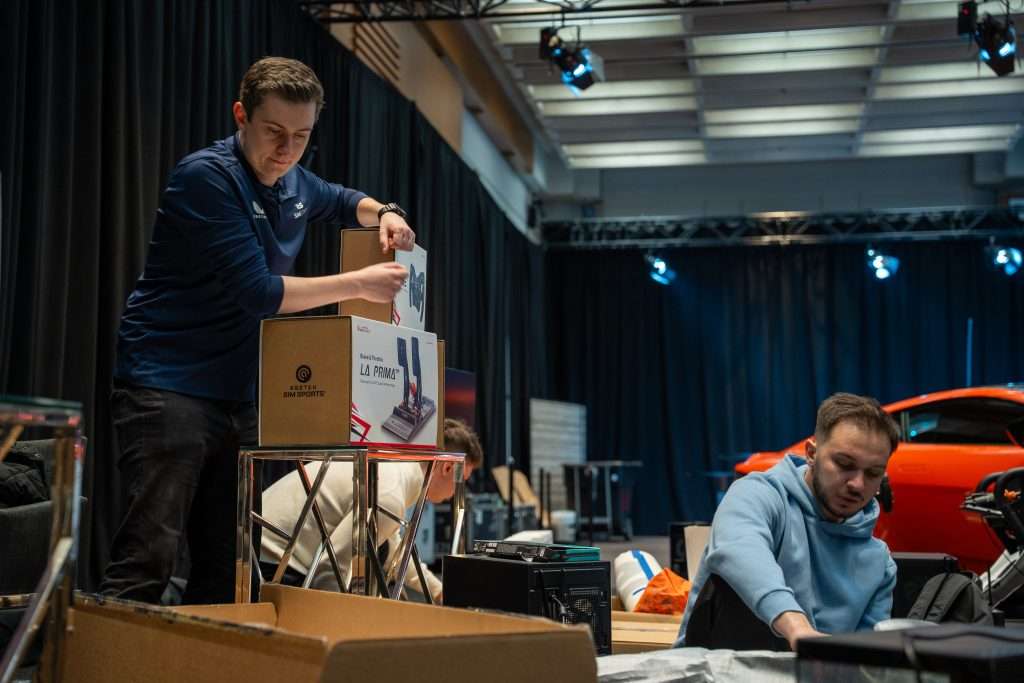
Transport is another win. Because the rigs are modular and easy to break down, you don’t need multiple trucks or heavy freight logistics. That cuts emissions before the event even starts and makes setup and teardown a lot easier on your team.

Image Source: SimStaff
And if you’re planning something outdoors, it’s still a solid option, as long as there’s cover. Sim racing doesn’t need much. A simple tent or canopy does the job. You don’t have to worry about wind knocking things over or complex gear overheating. Once it’s set up, the experience runs the same whether you’re indoors or out.
It’s efficient and planner-friendly. Fewer moving parts, fewer things to troubleshoot, and a setup that fits the space, the schedule, and the kind of experience you’re trying to create.
Add to that its low energy use, flexible setup, and all-weather reliability, and you’ve got one of the most versatile options for sustainable events happening today.
FAQs
Is sim racing really sustainable?
Yes. It runs on electricity, not fuel. No emissions, no waste, and the equipment is built for hundreds of reuses. Compare that to go-karts or fireworks, and the difference is obvious.
Can sim racing be used at indoor venues?
Absolutely. It’s compact, quiet, and doesn’t produce heat, fumes, or noise. That means no ventilation worries, no safety barriers, and no disruption to other parts of your event.
How does sim racing compare to other entertainment options?
It delivers the same competitive energy as go-karts or motorsports but without the fuel, noise, or logistics. You get a high-energy experience guests love, and a planning process that’s actually manageable.
Can sim racing be branded for my company or event?
Yes. Custom branding can be added both digitally (in-game, on leaderboards, and on-screen overlays) and physically (on wraps, signage, or banners). And most of it can be reused, making it cost-effective across multiple events.
Is sim racing suitable for all ages and fitness levels?
It is. The setup is low-impact and doesn’t require physical strain, which makes it ideal for mixed-age groups, corporate teams, and accessible events.
How much space do I need for a sim racing setup?
Each rig has a footprint of roughly 1.8 × 0.8 meters. For easy movement around it, plan for about 2.5 × 1.5 meters per rig, and you can scale up or down based on how many you need.
Conclusion

Image Source: SimStaff
Sim racing is fun and one of the most practical and sustainable event ideas available right now.
It reduces emissions, simplifies logistics, and creates a fast-paced experience your guests will remember. Whether you’re hosting a small team day or a large activation, sim racing fits the moment and respects the planet.
Let’s design your next event around experiences that wow guests and respect the planet.
Want to see how sim racing fits into your next event? Contact us to talk through your goals and to see what’s possible.