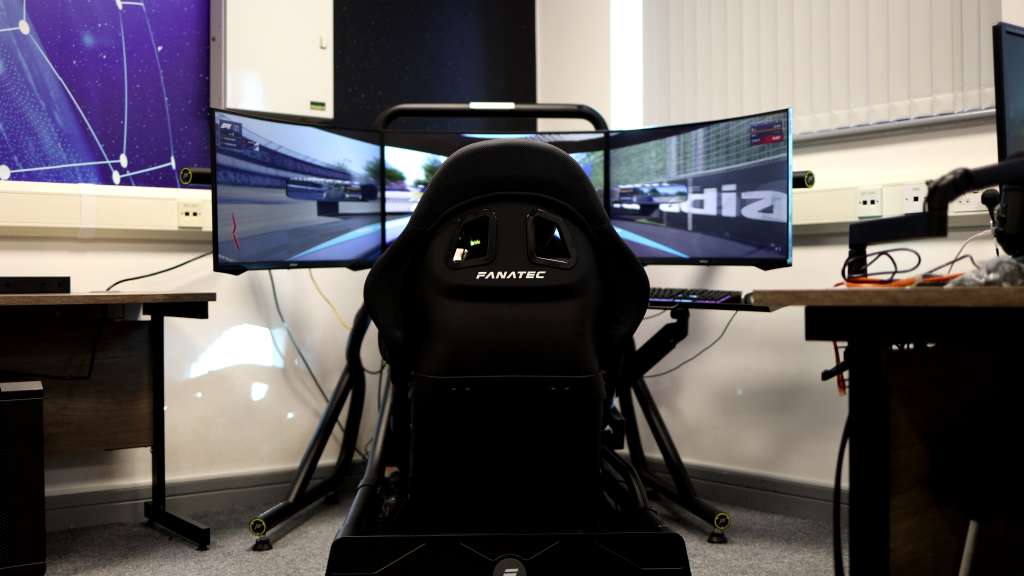
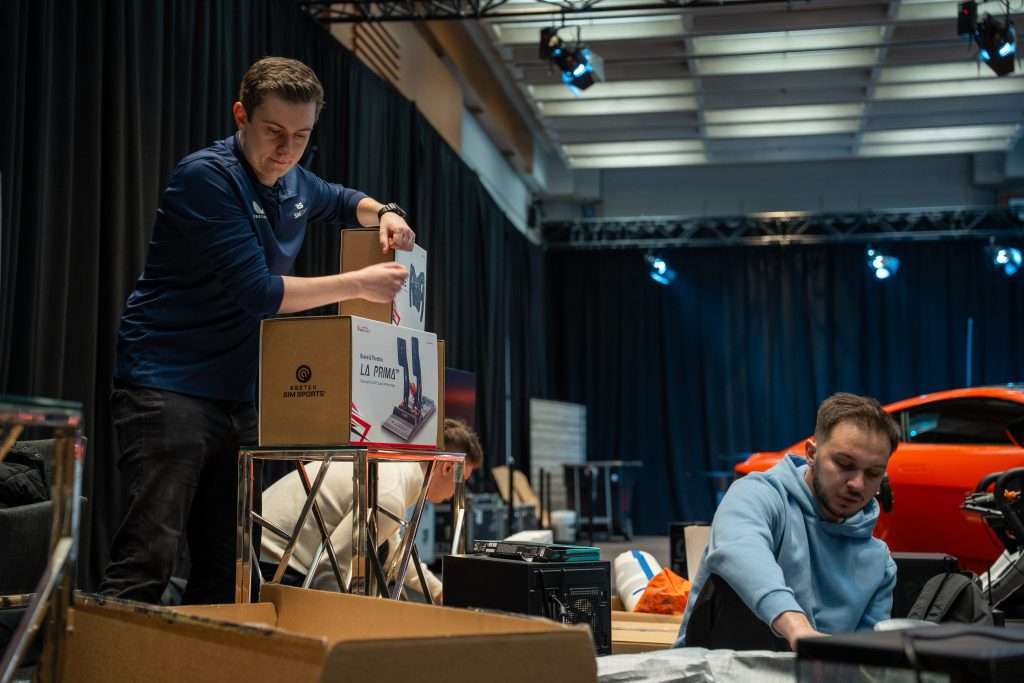
Athletes don’t recover by sitting still. After a tough match, they move slowly and steadily because the body bounces back faster with light engagement than with complete rest.
It’s the same with long event days.
When people spend hours in sessions, navigate crowds, and jump from one conversation to the next, their bodies respond the same way athletes do under pressure. Minds get overstimulated, muscles tighten, and sitting quietly doesn’t always help.
Planners often provide lounge areas or meditation corners to help people recharge. But more often than not, those spaces feel like pauses, not solutions. People take a break, then return to the event still feeling off.
Sim racing shifts that. It helps the body relax while keeping the brain gently focused. It adds movement without effort, attention without pressure—just enough engagement to bring the nervous system back to a neutral state.
Here’s why that works.
Why Active Recovery Beats Passive Rest

Image Source: SimStaff
After a long stretch of stimulation, rest doesn’t always feel restful. When attendees step out of packed sessions or busy expo floors, the stress often sticks around. The lights, the noise, the tight schedule – everything keeps the nervous system on edge. Even in a quiet room, the system doesn’t always know how to let go.
Cortisol remains active. Breathing stays shallow. The brain keeps running. It’s not a lack of quiet that keeps people tense; it’s a lack of release.
That’s why light movement can be such a powerful reset. It improves circulation, lowers tension, and sends a signal that things are safe again. Even just moving your hands or following something with your eyes helps your body shift out of stress mode.
And for many, sim racing feels instantly familiar. The screen, the steering input, and the visual tracking all tap into the same digital comfort zone that people know from gaming, scrolling, or even work tools. This cognitive familiarity removes hesitation. When your brain is overstimulated, the last thing you want is to learn something new.
It’s basic physiology: recovery means creating the right conditions for the body to slow down and settle. You can’t force it, but you can guide it.
Sim racing strikes that balance. It doesn’t require much effort, but it gives the brain something steady to focus on. You’re seated and relaxed, yet your attention is gently focused, and your body moves just enough. That rhythm helps everything find its way back to calm.
Athletes do the same after training. They don’t stop abruptly; they ease out of intensity with light movement. It’s called an active cool-down, and it helps the body return to balance faster. Sim racing plays a similar role in high-stimulation environments by keeping participants gently engaged so their systems can reset without shutting down.
It holds attention without being loud. It moves the body without wearing it out. It gives people room to breathe without asking them to sit in silence.
This kind of reset works especially well between keynotes or after long blocks of networking – just think of moments when people feel drained but still have more to absorb.
Controlled Adrenaline, Safe Release

Image Source: SimStaff
Most people think stress relief means switching everything off – no noise, no movement, no input. But the body doesn’t always want silence. Sometimes, it just needs something steady and simple to focus on – something that feels calm but not empty.
That’s what makes sim racing different. It brings just enough energy to help the body let go of all that tension without adding more stress. The visuals stay consistent. The pace is easy to adjust. There’s a rhythm to it that’s simple to follow, which helps people feel grounded.
The gear matters, but so does what your eyes are tracking on the screen.
As participants follow the track with their gaze, they engage in a kind of guided eye motion similar to what’s used in EMDR therapy. It’s called bilateral stimulation, and it’s been shown to lower anxiety, calm the nervous system, and support better focus and recovery. People are literally helping their bodies reset just by tracking the race.
And maybe, most importantly, they’re in control.
At busy events, attendees rarely get to set their own pace. The agenda moves fast. Conversations stack up. There’s always somewhere to be. That constant stream of input wears people down.
Sim racing hands that control back. Each person chooses their car, their track, and their pace. They decide when to start, how hard to push, and when to stop. These small decisions restore a sense of agency – something most people lose in high-structure settings – and that renewed autonomy helps them re-engage with the rest of the event, feeling more clear-headed and tuned in.
Even the format supports recovery. Each lap has a beginning and an end. There’s a clear rhythm to the experience. The brain doesn’t have to guess what’s coming next, which makes it easier to settle down.
There’s nothing loud, flashy, or unpredictable going on. The rigs are adjusted for comfort, volume, visuals, and sensitivity, so everything feels personalised – not overwhelming.
And while most people race solo, the space isn’t isolating. A few hang back to watch. Someone comments on the lap time, and another jumps in for a second round. These small, casual moments of connection happen naturally because there’s no pressure or forced icebreakers – just some shared focus and easy, low-pressure interaction.
Attendees leave feeling calmer, clearer, less wired, and ready for whatever’s next.
Designing a Stress-Relief Zone with Sim Racing

Image Source: SimStaff
Sim racing works best when it’s part of a well-considered environment. It’s not just about throwing a rig in the corner and hoping for the best. You’re setting up a space that helps attendees recover without pulling them too far from the energy of the event.
Start with the atmosphere. Soften the lighting to balance out harsh overheads or digital signage. Add elements like soft dividers or sound panels to reduce background noise. If possible, set up shaded rigs or anti-glare screens to keep the space visually calm. These touches help guests relax even before they sit down.
Next, think about how people will move through the space. Short sessions work best – around ten minutes per participant – to keep things flowing and make it easy for people to drop in. Near the rigs, set up a small cool-down corner – perhaps with water, stretch mats, or a few quiet seats. That extra buffer helps people ease back into the event feeling more settled.
Sim racing also functions well as the anchor for a broader reset zone. From there, you can layer in simple wellness tools like massage chairs, breathing guides, or a few soft visuals and soothing scents. Nothing complicated – just enough to remind people this space is for feeling better.
Framing matters. Some planners promote this area as an energy pit stop. That shifts how people see it – not a break room, not a wellness lounge, but a performance zone. A place to recharge, not check out.
And timing makes a difference. Slot it between keynotes, after heavy networking blocks, or during slower patches in the agenda. These are the moments when people need to reset but still want to feel part of the event. That’s when sim racing sees the most steady traffic.

Image Source: SimStaff
You’ll find it draws people in naturally. Some stop by out of curiosity. Others return after hearing someone else’s experience. The mix of movement, focus, and gentle challenge makes it genuinely rewarding.
And in a sea of typical stress relief activities, that kind of hands-on reset stands out. It doesn’t feel passive or performative. It feels useful.
The tech is portable. The setup is flexible. And once people try it, they tend to send others your way.
FAQ
Is sim racing effective for stress relief?
Yes. It helps people focus, stay lightly engaged, and release without it ever feeling like too much. The setup is calm, structured, and built to support real recovery.
How long should a session last?
Eight to twelve minutes works well. It gives participants enough time to settle in, find their rhythm, and reset without stepping away from the event for too long.
Is this safe for guests with anxiety or sensory sensitivities?
Yes. The rigs are fully adjustable: volume, visuals, motion, and seat position can all be adjusted to feel comfortable. It pulls you in just enough, with no harsh sounds, no sudden movement.
How does sim racing differ from VR-based relaxation apps?
Sim racing keeps people grounded. There’s no headset, you don’t have to worry about motion sickness, and no sensory overload.
What support does SimStaff provide?
We handle everything, from delivery and setup to on-site operation and user guidance. Our crew includes trained sim operators, tech specialists, and FIA & MSUK-accredited stewards when needed. All rigs are customisable, and we offer flexible rentals, global delivery, and branding options.

Image Source: SimStaff
Conclusion
Sim racing offers something most event wellness tools miss: structure, control, and a rhythm the body can actually use to reset. It’s not a passive break or a background distraction. It’s an active recovery tool that fits naturally into the flow of any event.
It works because it respects how people feel – overstimulated, over-scheduled, and in need of something simple, focused, and grounding.
And when you give your guests that kind of reset, they come back more present, more focused, and better able to engage with everything else you’ve planned.
Want to add a recovery zone your guests can use to get a reset?
We’ll take care of the setup and help you build a space that keeps people grounded and ready to go again.
Reach out to talk through your event goals, or explore our services to see what’s possible.