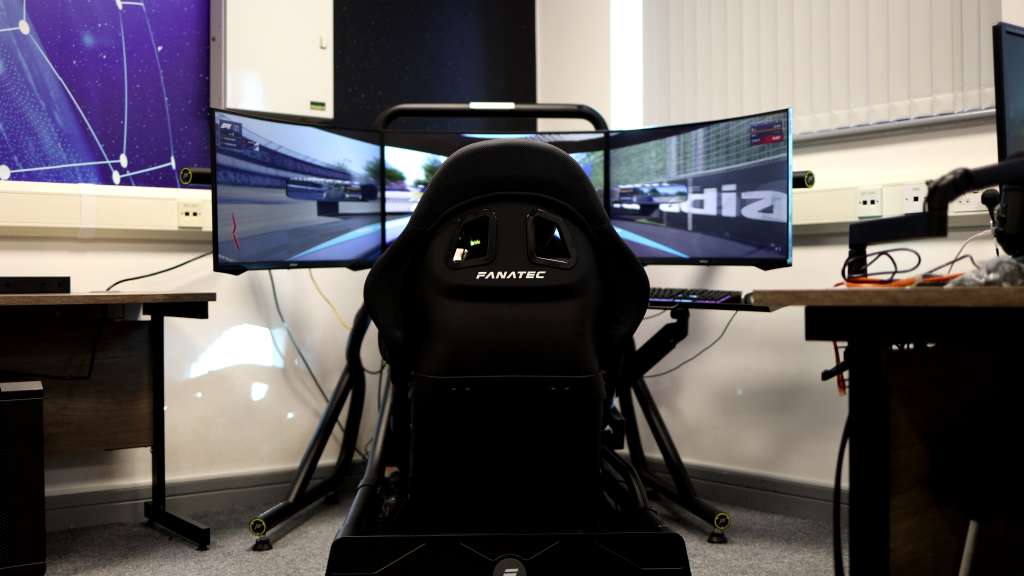
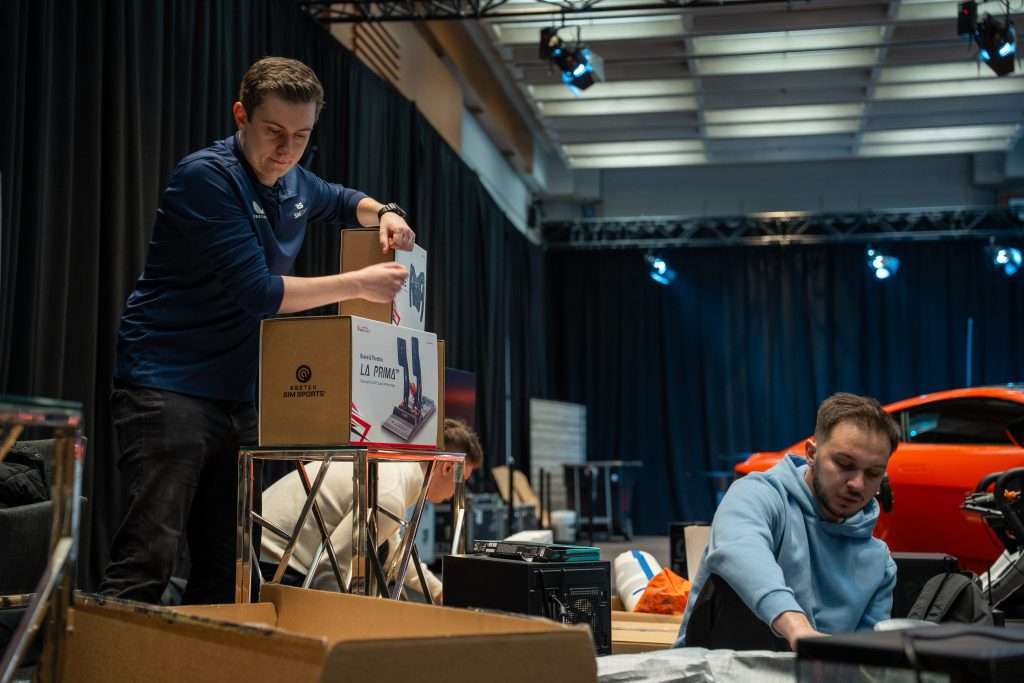
By day three of Canada’s largest auto show, Humber Polytechnic students were running a full motorsport experience. At SimStaff’s Auto Exotica booth, they welcomed a steady stream of visitors, coached first-timers to clean laps, and kept five professional-grade simulators running all day.
With hundreds of thousands of people moving through the Metro Toronto Convention Centre, every interaction counted. The team handled check-ins, quick briefings, and resets without drama. Guests left smiling, and the line kept moving. This is the partnership in action: students taking real responsibility on a national stage and making it work.
Making an Impact at Canada’s Biggest Automotive Showcase

Image Source: SimStaff
The Canadian International AutoShow is Canada’s largest automotive event, held each February at the Metro Toronto Convention Centre. The 2025 edition was the 52nd and welcomed 323,521 visitors across ten days, even with heavy snow at the start of the show. With crowds this size, execution mattered the most – every decision at the booth was visible and immediate.
SimStaff placed students from Humber Polytechnic’s Esports programme at the center of the show, treating the floor like a working classroom. Their assignment was clear: to operate simulators, support guests, and represent the SimStaff brand as well as its partners. The students became hands-on operators, troubleshooters, and brand ambassadors working in a live, high-traffic environment rather than watching from the sidelines.
SimStaff was set up inside the Auto Exotica area, a performance and luxury showcase that attracted enthusiasts all day. The team’s 24 × 35 ft space housed five professional simulators built on Asetek SimSports Forte wheelbase, wheel, and pedal sets, mounted on Playseat Formula Intelligence chassis. Each station ran on Canada Computers supplied PCs with AMD Ryzen 7 CPUs and NVIDIA GeForce RTX 4060 Ti graphics, driving a Samsung Odyssey G9 ultra-wide curved display. With the booth set up in a high-traffic spot, the line never stopped, and guests arrived expecting realism, quick onboarding, and a fair shot at a respectable lap.
Students handled the entire guest cycle. Mornings started with equipment checks to keep the rigs dependable under continuous use throughout the day. During the show, they welcomed visitors, got them settled in the sims, and offered concise tips so even newcomers could complete a clean opening lap. When someone spun or got stuck, a student would reset the session, coach them through the restart, and keep the line moving.
Students became the face of the event. Between runs, the students had the opportunity to explain SimStaff’s offerings, their knowledge on the gear in use, as well as the Humber Esports program, directing interested visitors to the on-site SimStaff team for additional information and the official social channels for updates. The result was exactly what the collaboration set out to prove: education linked directly to industry practice, with students building credibility alongside a worldwide company and in front of a national audience.
Behind the Scenes, How Learners Became Leaders

Image Source: SimStaff
Students took over the heavy lifting from day one. Before the doors opened, students tightened mounts, calibrated the wheels, tested force feedback settings, and ran shakedown laps so five simulators could handle hours of use. Once guests arrived, they greeted spectators, buckled in drivers, and gave short briefings that made the first laps feel doable.
But the initial layout wasn’t working; guests were bumping into barriers, and the queue was backing up. Instead of waiting for direction, the team met at the edge of the queue, shifted barriers, widened the entry, and marked a simple path from line to briefing to drive. Bottlenecks eased, accessibility improved, and the stand felt organised instead of overcrowded and chaotic.
Students mastered live troubleshooting fast. If someone spun into a wall or froze mid-corner, a student would reset the session, share a practical tip, and send them back out. The line kept moving, and the confidence of the student team and drivers rose.
Then Nitik had an idea. Offer extra laps to anyone who followed the program’s social channels. People reached for their phones, followers climbed during sessions, and drivers had a reason to come back through the queue. SimStaff founder Josh Martin called it out on camera as a way of driving “greater signups, greater brand engagement,” and noted the lift continued after the show.

Image Source: SimStaff
Each student brought their strengths to the floor. Michelle, a media communications student at Humber Polytechnic, was given the opportunity to gain real-life experience in producing clean, professional footage and timed shots to moments that mattered. The student team even had the ability to work alongside SimStaff’s content team, providing live event footage for the social channels.
On the technical side, Josiah kept it simple: “As an event technician, I helped with setting up the booths, assembling the sims, helping the public get in and out, and helping people understand how sims work.” That plain, step-by-step style calms first-timers and keeps the line moving. In a crowded hall, that’s what leadership looks like.
By nightfall, the students owned the floor. They refined the space, coached drivers, fixed problems in public, and turned booth energy into real followers and future interest.
Real-Life Lessons and Lasting Skills for Students

Image Source: SimStaff
By Sunday night, the students were running a live experience from start to finish. They kept the hardware dependable, guided first laps with confidence, and solved problems with a crowd watching.
The layout fix on day one showed how they make decisions. Bottlenecks and wheelchair access needed attention, so the team watched where people stalled, shifted barriers, and set a simple path from the queue to the briefing to drive. Within an hour, the flow was smooth and everyone could reach the rigs.
They handled the technical side under pressure. If a wheel drifted out of calibration or pedals went soft, a student jumped in, ran a quick test, and sorted it before the next seat change. As Josiah put it, he spent the day “setting up the booths, assembling the sims, helping the public get in and out, and helping people understand how sims work.” That calm, step-by-step approach kept sessions steady.
Communication got easier with practice. A nervous ten-year-old just needed some encouragement and one simple tip about the brakes. A seasoned sim racer wanted to know how to find that extra tenth of a second. Students figured out how to size people up quickly and give them exactly what they needed to have a good time.

Image Source: SimStaff
They also saw how small ideas can add up. Nitik’s extra-lap incentive for social follows turned line energy into something measurable. People pulled out their phones, came back for another turn, and the program kept more of that interest after the show. Josh Martin credits the move with “greater signups, greater brand engagement.”
So where does this lead? Some students can step onto an esports broadcast crew, start as runners or observers, and grow into timing and segment support. Josiah and others with a technical background could easily move into sim-tech roles, keeping rigs healthy and troubleshooting when things go sideways. And Michelle already showed she knows how to plan a quick shoot, grab the right moments, and turn it around fast for social.
That is the point of the partnership. As Bernard Mafei says, the goal is getting students “two feet in spaces where they can make their dreams reality.” When you have already handled real responsibility in front of real crowds, the next opportunity feels within reach. For the full picture of how this model runs year-round, see A Life in the Fast Lane — SimStaff × Humber Polytechnic.
Conclusion
Across ten days at the 52nd CIAS, Humber students did real work: they kept five pro simulators reliable inside Auto Exotica, fixed a layout so the space stayed accessible, coached newcomers to clean laps, and used a simple extra-lap idea to drive more follows and return runs. The result was a smoother booth, stronger engagement, and a clear picture of what hands-on learning can deliver.
The benefits last longer than the show. Students leave with judgment under pressure, technical troubleshooting, clear communication, and brand awareness that transfer to esports, engineering, and media roles. For Humber Polytechnic and SimStaff, it confirms the model works and sets up deeper collaborations at future shows and on campus.
Inspired by what our students accomplished? Bring meaningful STEM experiences to your institution today with SimStaff.