Sustainability efforts need not be the troublesome compromise they are often depicted as. Choosing greener options is a responsibility that everyone should take on, particularly those in the entertainment industry. Reevaluating your event planning will not only reduce your environmental impact but also enhance your event beyond traditional, less eco-friendly formats that have become obsolete. In this entry, we will guide you through practical steps to achieve this.
Advocating and Aligning for Sustainability
Traditional events are often criticised for generating significant amounts of waste and contributing to travel-related emissions, and as a result, stakeholders on all levels now expect greener practices, driving the demand for changes in event planning across all industries.

Photo by Google Sustainability
To meet these expectations, look into the controllable parameters of your event, such as the props used for branding (signs, banners, etc.), the choice of materials for cutlery and plates, promotional merchandise, the recommended travel methods for attendees, as well as venue characteristics (particularly whether or not it offers greener power-delivery solutions). Careful decisions in these areas will help you address these increasingly urgent demands. By implementing these changes, event coordinators can reduce the environmental impact of their events by approximately 24% (Lawson, 2023).
We recommend these initiatives to help event planners advocate for greener experiences:
- Utilise headline figures in your presentation. For example: “The average conference attendee generates 30.3 kg of CO₂ per event day” (MeetGreen, 2025). Use precise numbers to help your team understand the scale of the issue.
- Include “sustainability” in event KPIs (Key Performance Indicators). List it alongside budget and attendance on your planning spreadsheet to ensure it remains visible to the entire team.
- Send a two-question poll to sponsors, exhibitors, or senior management, asking which green outcomes they value most (e.g., waste, carbon, wellbeing) and which sustainability practices or goals they would like you to prioritise for this event.
- Appoint a sustainability lead and assign them clear responsibility, even if it constitutes only a minor part of their role, to ensure actions do not get lost between departments.
Start Paperless and Plastic-Free
In the context of the pre-event phase, paper should belong to the past. The headache of sending out physical tickets, badges, and attendee packs can also become a relic of bygone days if replaced by email solutions, event apps, or QR codes. By doing so, you can streamline your event logistics, reduce costs, and lessen the emissions generated from shipping and printing entry materials.
To reduce your environmental impact, consider using pitchers and tap water stations instead of bottled water. Provide compostable or reusable cups, plates, napkins, and utensils, along with clearly labelled waste stations for compost, recycling, and landfill disposal. Ensure they are placed in highly visible, high-traffic areas to help guests easily support the green agenda.

Photo by Wolesely
Another crucial aspect to think about is the purpose of your giveaway merchandise. Here, your thought process should be: “Is it useful?” and “Will it be useful in the long run?”. An excellent example of generally useful merchandise that simultaneously addresses the target audience’s potential event-going habits is Asetek SimSports’ earplugs, neatly inserted into a lanyard-mounted metal ‘bullet-size’ casing. These may prove beneficial for future motorsport events that attendees participate in, or, very fittingly, later during the ADAC SimRacing Expo, when they go to hear the inline 6-cylinder, V8, V10, and V12 monsters at the event, roaring at ear-deafening decibel levels.
So, to sum up this section:
- Utilise e-tickets sent via email or SMS, as well as event apps and QR badges, to cut costs and lessen your environmental impact.
- Offer pitchers or tap-water stations with reusable cups, and opt for compostable or reusable service-ware for food and drink.
- Select practical, reusable promotional items rather than disposable merchandise that has a shorter lifespan.
- Install clearly marked waste stations for compost, recycling, and landfill in high-traffic areas.
Pick a Venue and Travel Plan That Cuts Emissions
When selecting a venue for your event, the specific location also plays an essential role in your sustainability efforts. The time of day is important, as you should ensure that your event takes place outside peak traffic hours while also allowing you to maximise natural daylight in your event areas. This strategy reduces reliance on artificial lighting and decreases energy consumption.
Another factor to consider is whether the venue provider is on a green electricity tariff, which means they use renewable energy sources. Look for green building certifications, which typically denote energy efficiency and sustainability. Additionally, considering the energy source for your event, whether it is solar, wind, or hydro, can be a valuable KPI to include in your event debrief.

Photo by SimStaff
As mentioned earlier, it is important to consider traffic patterns when making transportation recommendations for your attendees, which should be included in every digital invitation. Options such as rail and shuttles might be particularly attractive because they eliminate parking concerns and reduce the number of cars on the road. Combined with your daylight-maximisation considerations, timing your event to avoid peak traffic hours for both the start and end of your event will help create a smoother experience for everyone choosing to use public transportation. Offering a clear overview of public transport options can help ease guests’ worries about exploring an unfamiliar city. This not only helps them feel more at home but also contributes to reducing travel-related emissions for everyone involved.
An overview:
- Schedule sessions in daylight-rich rooms.
- Choose locations that use green electricity tariffs and obtain renewable energy.
- Include clear public transport guidance, schedules, and connections in every digital invitation.
Serve Greener Food and Manage Waste
Your event may require food, so to add another parameter to the puzzle, we recommend exploring options in the local area surrounding your venue. As a start, this will help you minimise “food miles”. Furthermore, when reaching out to local catering companies, consider consulting with them on how they can further assist you in achieving your sustainability goals. Do they offer sustainability-conscious services concerning packaging and waste management? This will be an important factor to consider in achieving your green goals.

Photo by Food Grade Packaging
Another thing is planning portion sizes and food variety. Smaller offerings will give you better control over waste, and for any leftovers, you can coordinate with your chosen catering partner to arrange compostable packaging solutions. These solutions can then be offered to guests or others interested in taking them home rather than having them thrown away. As a backup plan, if you cannot donate your leftovers, collaborating with the venue organisers to set up recycling or compost bins will help manage any food waste effectively.
When planning a sustainable menu, everyone should prioritise plant-based options as the default, and if meat is offered, ensure it’s an optional choice for those who want it. Catering and every facet which surrounds it heavily influence your environmental footprint. Therefore, event organisers must get this one right.
Overview:
- Plan your catering to minimise packaging, reduce waste, and source local ingredients to lessen food miles.
- Serve plant-forward main dishes, with meat available as an option.
Choose Low-Impact Entertainment
Attending a motorsport event, such as the 24 Hours of Le Mans or the Nürburgring 24 Hours, is a festival-like experience that engages all the senses in multiple ways. While the sounds, sights and scents of the high-octane monsters and burnt rubber might be a captivating spectacle (as well as the airborne ‘vitamins’ found here that some swear by), it is a taxing undertaking not only on costs but also on the environment to organise and bring it all together from almost every corner of the world.
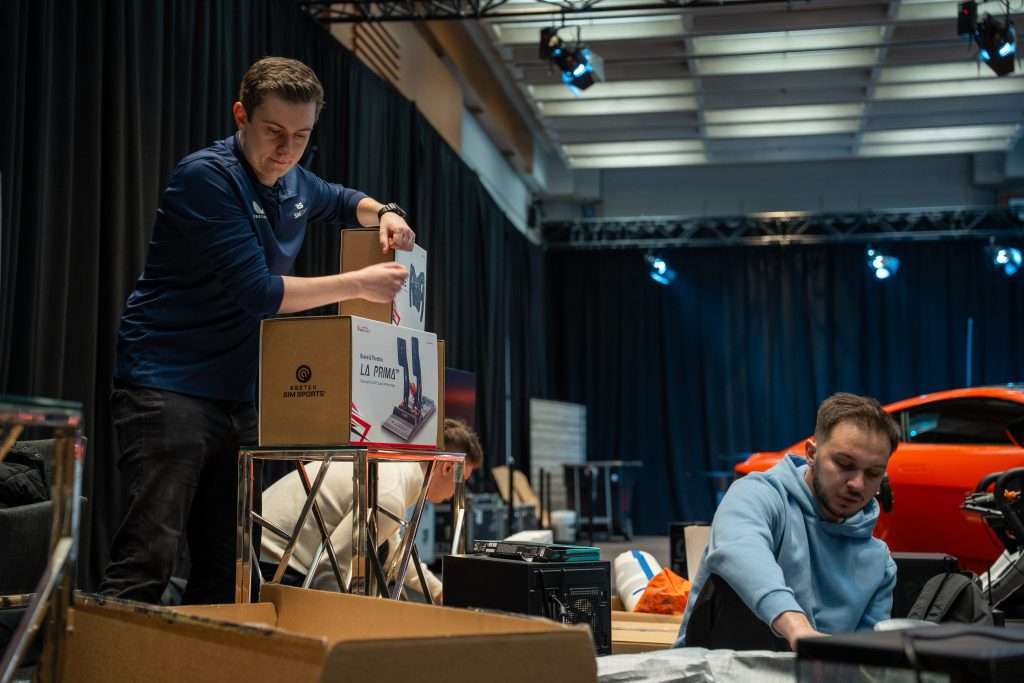
SimStaff enhances the experience by placing the event-goers at the centre of the action behind the wheel while also providing captivating visuals for spectators. Not only is the simulation experience powered by electricity, but each simulator is also easily transportable within its flight case. They occupy minimal floor space yet deliver the same level of engagement as their real counterparts, if not a higher one.

Photo by SimStaff
Unlike high-emission crowd-pleasers such as fireworks or touring bands, our racing simulators create a participatory-focused experience for everyone involved, which can be exemplified by the use of leaderboards on venue screens, which enhances the excitement inherent in the spirit of competition. Inviting participants to engage with your brand by coupling it with, for instance, a time-attack competition will surely make for a memorable experience when they reflect on what your brand represents.
For your future planning convenience:
- List current entertainment ideas and note their fuel or freight needs.
- Offer at least one digital alternative, e.g. sim racing rigs.
- Check the power draw with the supplier to ensure it fits standard venue circuits.
FAQ
1. What is a baseline first step toward a more sustainable event?
Go paperless: Switch to e-tickets, QR codes and digital event apps to eliminate a primary unnecessary source of waste. Keep it digital while also streamlining the attendee experience.
2. What can I do to minimise travel emissions for event attendees?
Include clear public transport options in your invitations, emphasise rail or shuttle services, and avoid scheduling events during peak traffic hours. Make it easy for attendees to use public transport and avoid the hassle of parking.
3. What steps can I take to enhance catering sustainability while ensuring a positive guest experience?
Collaborate with local caterers to source locally grown, seasonal ingredients. Offer plant-forward menu options as the default, with meat as an opt-in. Use compostable or reusable serviceware and minimise portion sizes to avoid unnecessary waste.
4. Can racing simulators really reduce an event’s carbon footprint?
Yes. Sim racing rigs operate on electricity, require minimal freight, and use very little floor space or energy compared to high-impact alternatives such as pyrotechnics or touring bands. They provide immersive entertainment for spectators and allow eventgoers to take the wheel and compete with one another.
Sustainable choices for your event do not entail sacrificing the event experience; instead, they mean rethinking tradition, redirecting efforts and resources, and, in general, working smarter to elevate the event experience. We hope these five steps prove valuable and help your team steer your efforts in a more future-ready direction.
References
Lawson, C. (2023, May 2). Events and sustainability. Outsourced Events. Retrieved June 14, 2025, from: https://www.outsourcedevents.com/knowledge-insights/2023/events-and-sustainability
MeetGreen. (2025). Corporate Sustainability Policy & Report. MeetGreen. Retrieved June 14, 2025, from: https://meetgreen.com/about-meetgreen/corporate-sustainability-policy-report/