Five years ago, SimStaff was born thanks to a simple idea: sim racers could do events better than event companies could do sim racing.
Today, that idea has blossomed into an international team of more than 120 consultants across 17 countries, working with some of the biggest names in motorsport, alongside brands, event organisers, and private customers around the world.
That journey was celebrated in style this past weekend, as the SimStaff team, partners, clients, and friends came together at the Hilton Garden Inn Silverstone to mark the company’s fifth anniversary.
It was an opportunity to celebrate what’s been achieved but also to reflect on where it all began, and while SimStaff has changed considerably over the past five years. But one thing hasn’t changed at all… the people behind it are still sim racers at heart.

Image Source: SimStaff
How It All Began
To understand why SimStaff exists, you have to go back to Josh Martin’s own experience in sim racing.
Long before founding SimStaff, Josh was competing himself. Representing Bentley Motorsport, Martin raced in the SRO E-Sport GT Series and was sponsored by Thrustmaster and a number of other leading brands. However, as someone who was beginning to experience the industry inside and out, he began to notice a problem.
“At events, quite often the sims would be less than ideal. Things like the force feedback being set up wrong, or even the steering wheels being upside down. So SimStaff was set up with the premise of ‘sim racers can do events better than event companies can do sim racing,’ and in working with the likes of Formula E and Formula 1, as well as many individual brands and private customers, it really speaks to the overall quality of our work.”
For SimStaff, the goal wasn’t simply to bring simulators to events. It was to make sure the entire experience, from the hardware and configuration to the technical operation, was done properly, and that philosophy has remained at the heart of SimStaff ever since.
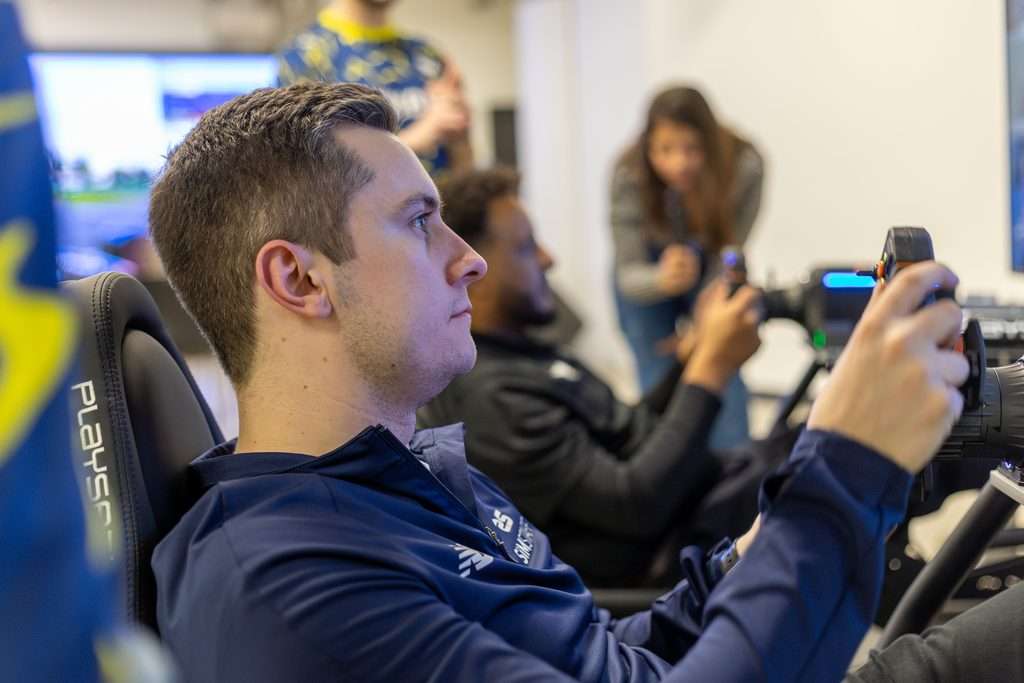
Image Source: SimStaff
The Early Days
Like with most new companies, SimStaff’s infancy was a time where the team was small, as were the projects, and everyone was involved in just about every aspect of the operation. One of the earliest milestones for SimStaff came when the group held their first-ever training day at Williams Racing, a day Josh Martin looks back on fondly.
“We went from having a small team at first, but our first training day was at Williams. It was a training day we ran privately, but Williams kindly let us use their space. That for me was quite a big step up.”
It was a fitting location for a company whose ambitions were already rooted in motorsport, and it wasn’t long before the opportunities began to get bigger.
In SimStaff’s second year, the company became involved with the F1 Exhibition, providing simulators as part of the experience while also proving to be a pivotal moment for the company. Being involved with a major exhibition connected to Formula 1 demonstrated that SimStaff’s expertise wasn’t limited to smaller activations, and that the team could deliver work to the standard expected by one of the world’s biggest sporting brands.
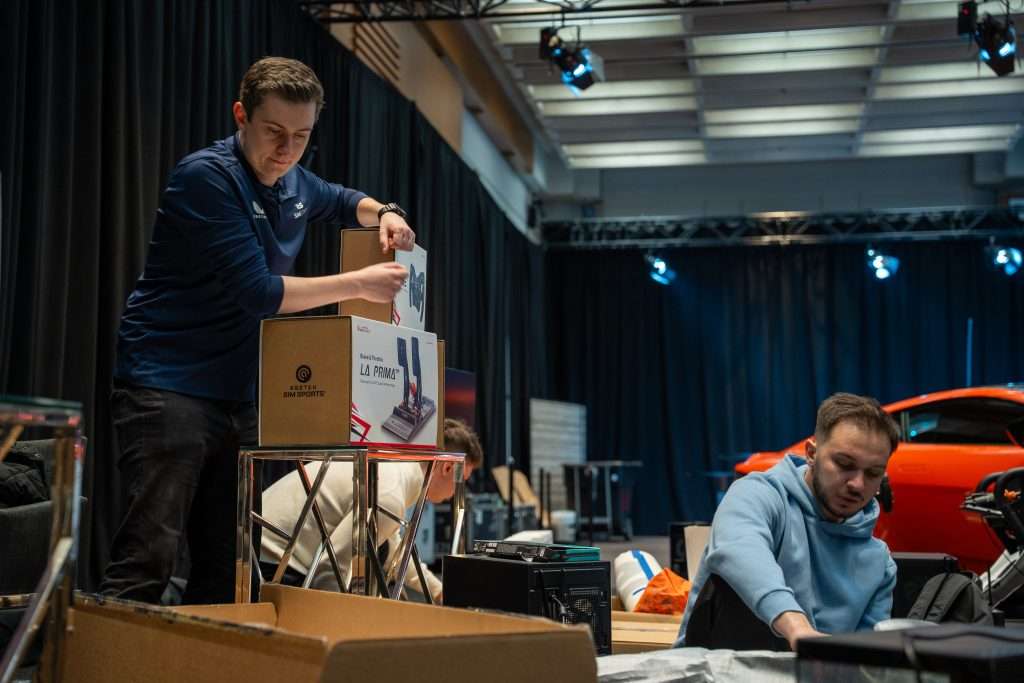
Another memorable project came through the BBC Children in Need Sim Rig Tour, which, unlike a permanent installation, was a touring activation that brought its own unique challenges. Equipment needed to travel to every corner of the UK and be rebuilt to perform consistently at different locations, while the team itself needed to be able to react to the differing environments each venue and layout offered.
For SimStaff, projects like these helped establish something that would become increasingly important: the ability to adapt its expertise to different environments, audiences, and requirements to deliver the best possible experience anywhere in the world.

Image Source: SimStaff
From Events to Permanent Installations
One of the biggest developments in SimStaff’s journey has been its move into permanent simulator installations. The same expertise that was developed through years of events and activations could now be applied to fixed installations in museums, visitor attractions, brands, and other commercial environments.
Permanent installations demand a different level of planning. The hardware needs to withstand continuous public use. Systems need to be reliable and easy to operate. The design needs to work within the physical space. Accessibility needs to be considered. And crucially, the entire experience has to be built around the people who will ultimately use it.
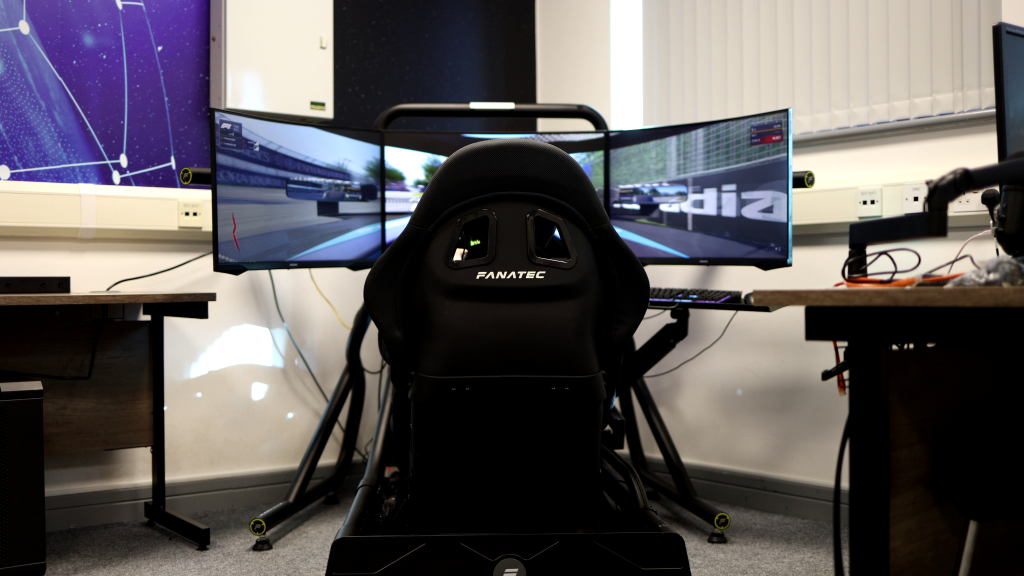
Recent projects such as the new SimSuite at the Silverstone Museum demonstrate just how far SimStaff’s capabilities have developed. Built in tandem with Fanatec and Overclockers UK, the installation features 10 professional racing simulators while showcasing industry-leading hardware, expert design, and a commercial installation experience in one of motorsport’s most legendary locations.
Notably, accessibility was built into the Silverstone SimSuite from the outset, with the SimStaff engineering team designing and manufacturing two bespoke accessibility simulators in-house, the first of their kind by SimStaff. These stations allow wheelchair users to race without transferring into a cockpit, delivering the same immersive driving experience as every other simulator in the suite.
The result is one of SimStaff’s proudest achievements: a professional-grade simulator environment that combines a premium experience with the durability and efficiency required of a busy visitor attraction.

Image Source: SimStaff
Building an International Team
Perhaps the clearest indication of how much SimStaff has changed over the years is the size of the team itself. The company has gone from a small founding team to a network of more than 120 consultants in 17 different countries. That international reach means SimStaff can support projects locally in markets around the world, rather than relying on a single central team.
But for Josh, growth hasn’t meant losing the thing that made SimStaff different in the first place.
“In terms of what’s not changed since day one, the approach that we take is still very much ‘by sim racers, for sim racers,’ because everyone we work with is a sim racer at heart.”
That philosophy remains one of SimStaff’s defining characteristics. The people working on a simulator aren’t simply technicians sent over to install equipment. They understand sim racing deeply because they are part of the community themselves.
As SimStaff has grown, so has its technological focus. The company has developed its own software and technology solutions, allowing it to address the specific requirements of commercial sim racing environments rather than relying entirely on off-the-shelf solutions.
That development is continuing through projects such as SimRigSupport, which helps brands and individuals with their sim racing requirements, as well as the Sketch-to-Showroom project that’s being developed through SimStaff’s partnership with Humber Polytechnic in Canada.
These initiatives represent another major evolution in the company’s journey. SimStaff isn’t simply responding to where the industry is today. It’s looking at how technology, engineering, and a global network of technical expertise can help shape where the industry goes next.
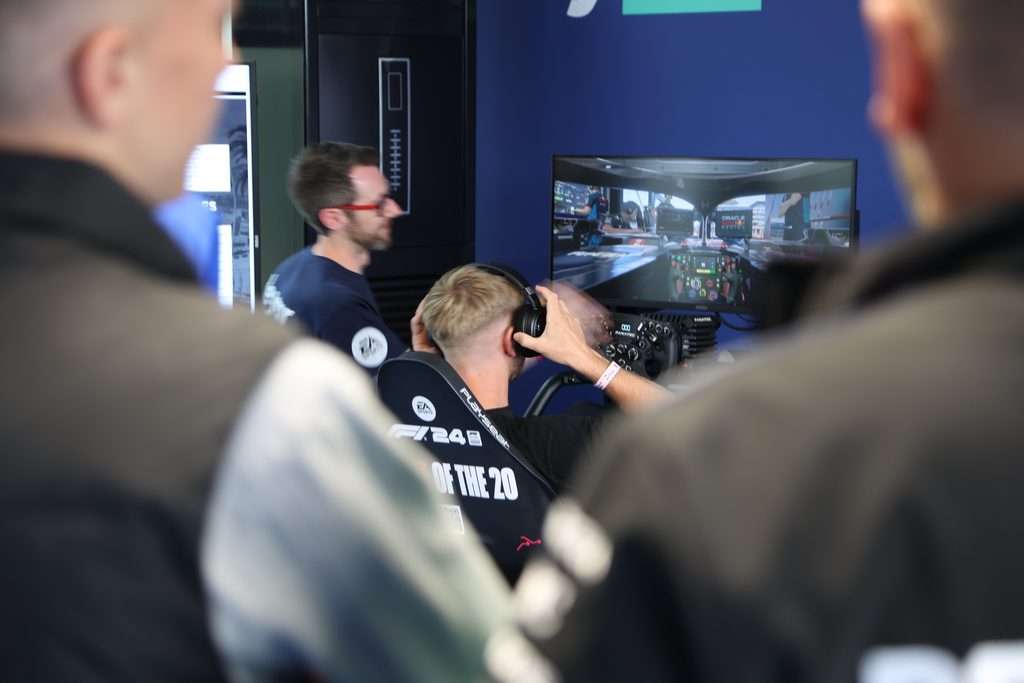
Image Source: SimStaff
Partnerships That Have Shaped the Journey
Needless to say, none of this would have been possible without the network of partners, clients, and organisations that have worked alongside SimStaff over the past five years. From hardware manufacturers and technology providers to motorsport organisations, brands, event companies and educational institutions, partnerships have been fundamental to the company’s development.
Working with organisations such as Formula 1, Formula E, Fanatec, Overclockers UK, Humber Polytechnic, and countless others has allowed SimStaff to take on increasingly ambitious projects while bringing together expertise from across the industry.
Those relationships have also helped SimStaff understand what different clients need from a simulator experience, and the result is a company that can approach a project from multiple perspectives: as sim racers, technicians, engineers, event specialists, and technology developers.
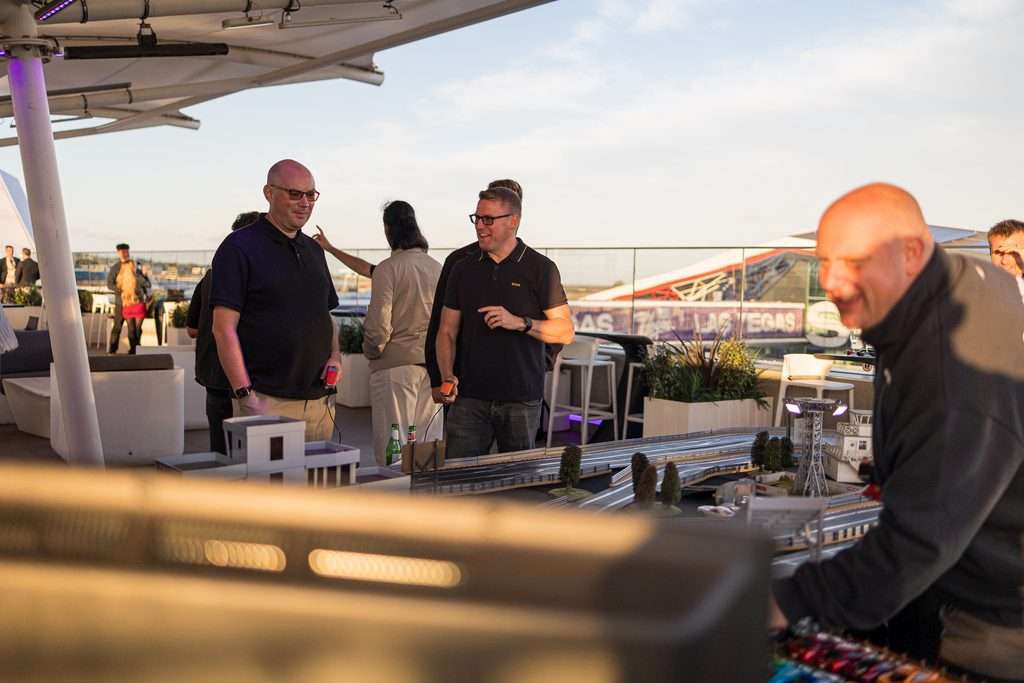
Image Source: SimStaff
The Next Five Years
If the first five years have been about building the foundations, the next five are about seeing just how far those foundations can take SimStaff. Josh Martin expects the business to continue growing, but the vision goes beyond simply becoming a larger company.
The development of SimRigSupport, the Sketch-to-Showroom project with Humber Polytechnic, and the company’s growing international network all point towards a future where SimStaff can support more people, in more places, across more areas of the sim racing industry.
“Today, we have technicians in so many cities and countries around the world, so the idea is that we can help people locally and make a big difference for them and the overall industry.”
For Martin, as well as everyone else involved, five years of SimStaff isn’t just a story about the company. It’s a story about the people who have helped build it, and the anniversary celebration at the Hilton Garden Inn Silverstone was a chance to bring many of those people together and say thank you.
Five years ago, SimStaff started with an idea born from a passion for sim racing and a frustration with the way simulator events were being delivered. Today, that idea has become so much more.
The scale may have changed.
The technology may have changed.
The projects may have changed.
But the philosophy hasn’t.
“By sim racers, for sim racers.”