You don’t get to the creation of the Esports World Cup, the prestige of F1 Esports or the realm of testing a Formula One car in anger from just being in your bedroom and gaming with your friends. Each decision is, like life, a business decision. From who you race with, what you race in and most importantly, who you team up with, the difference between a big fish in a small pond and a world beater is slimming by the day. To tackle this closing gap, the best teams all want the best drivers, and the way forward with that is undoubtedly through how a team is organised, how they protect their best drivers and not just how they bring in the next generation, but when. Treat it like a business and success is but a corner away. These are the Talent Management Strategies that could turn a mid to late pack runner into a trendsetter.

The Perfect Candidate
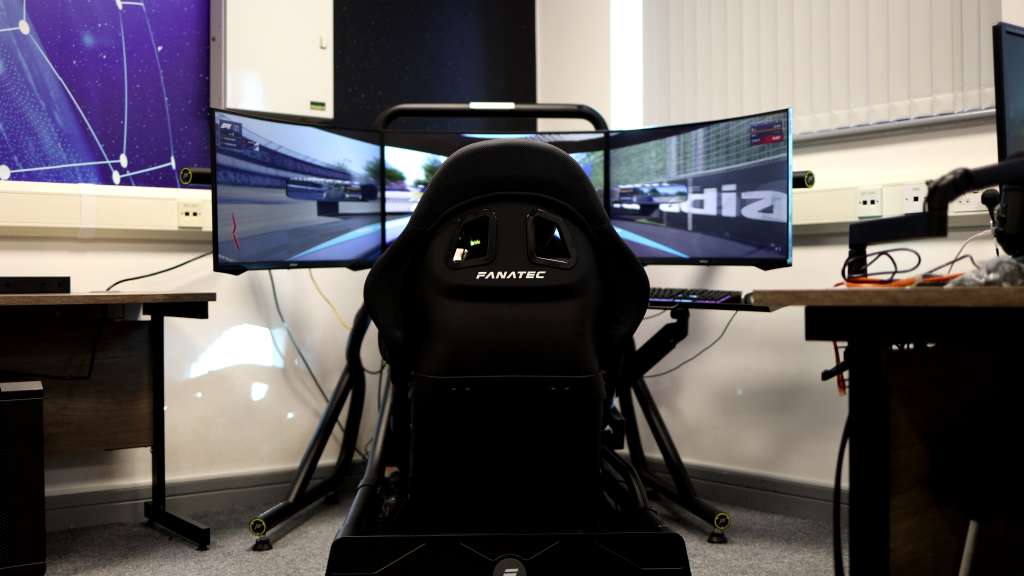
No two drivers will ever be the same, and as such, to find the right personality fit for the right group can be a testing challenge. This is where a group of individuals fall apart in comparison to the sum of parts a team creates. It is becoming more widely accepted in the modern sim racing landscape that there are huge bonuses for grabbing the team together and cementing a strong foundation. The Coanda Esports house in Gronau, Germany is a prime example of this, along with Apex Racing Team’s Sim Racing Office in Corby; the vast majority of success comes from being able to take team building to a new level, and taking the “streamer house” concept to a new level.
Not everyone can be in one place so finding the right talent is about what statement you want to make to everyone around. Everyone wants to find the next ace but if you have 8 aces in a pack, not everyone can be the leading actor. Likewise if you have a group of drivers who all are below where you want to be, then any form of a splash becomes nothing more than a ripple in the pond. Why are you hiring, what gap does the driver fill and will that hiring bring better results out of them or their teammate are the three things that must be asked with every decision made.
Pipeline to Success
Many fantastic teams have come and gone but in order to remain at the top, like Redline, Coanda and Apex have managed to do for so long, you have to be able to offer progression and development for talent. Five-star wonderkids remain only two stars when there is no way for them to get better. Finding the right level of competition, training partners and setup guidance is crucial for seeing the next stage. The Apex Racing Academy is a fine example of seeing new and exciting drivers push to the next level and seeing more familiar names such as Guillaume Levesque take the decision to go academy before rising to the main roster. Apex was the pipeline that first discovered Sebastian Job, arguably one of the greatest sim racing performers of all time. He didn’t reach the top straight away, he wobbled for a time on moving to Core Motorsports but when he and Frederik Rasmussen made steps to be the best that they both could be, you have two generational talents proving now in their respective games that they are the elites. Without Job’s foundations in Apex, there is no way he becomes the world beater he is today.
It’s all well and good going and getting drivers but keeping them is equally as important. Turnover creates turbulence and one of the best places for limited turnover is at Team Redline. Known as Max Verstappen’s sim racing team, it could have been easy for someone like a four-time F1 World Champion to walk into Red Bull and continue in their sphere. Yet, this is the same Max Verstappen in 2015 showed off his training with his Redline teammate Atze Kerkhof around Spa-Francorchamps, getting ready for racing later in the year. Lap after Lap of side-by-side racing proved Max could be aggressive and make moves, and when his then Toro Rosso screamed around Blanchimont corner passing Felipe Nasr’s Sauber, it was clear that the sim work done by Redline would hold him in stead for a long time.
While that is a real world application, the team itself has been solid for many years. From the Finnish contingent of Greger Huttu, Aleksi Uusi-Jaakkola and Olli Pahkala paving the way in the mid 2010’s to the newer variant of Diogo Pinto, Chris Lulham and Gustavo Ariel, Redline are a team of prestige, that pushes for the best, works with the best and creates the best racers. Moreso now than ever, the team game is emphasised far further than before, and that has meant saying there is now, for the first time, truly no number one driver at Redline, so long as Redline wins. That could be constructed a number of ways but if you want a team like that, creating a teamwork culture, setting out performance management through driver development and crucially figuring out at all points a succession plan for the drivers is paramount to success.
Not All About The Drivers
What does get lost in success is what the managers accomplish. From Dom Duhan, Alex Simpson, Jorn Jens and many others over the years have been able to win in building not just a good team, but the right team. Every successful football team has a head coach, no different in sim racing. The ability to take the focus away from the prize, to narrow down to just a race, a lap or a corner has been sublime to see. They are the conductors of orchestras and the glue that holds great teams together and they do what they do not to expect a thank you, but to see their talent achieve what they believe is possible.
And finally, it is often troubling to find in the sim racing sphere that each new tournament and racing series is the next one to dethrone the last several as the best in the world to race in and has the most importance. Constant game switches, category changes and prize pool announcements have been catalysts for new drivers in and out. Retention is difficult when chasing the payday becomes the priority, but “getting the bag” isn’t always the end solution for all drivers. The way to view it is by taking a look at what has worked and what will be for the future. Consolidation is often viewed negatively but for many teams, keeping all of their assets is what will make them stronger over time. In a world full of fantastic drivers and teams, the same three keep reaching the summit based on their talent management strategies.
There is always a rush to the top, but those in the middle can’t get to the top without learning a few tricks. This is where skill cultivation and team chemistry become integral to success. You can’t learn as effectively without asking a couple questions along the way, and having drivers who are happy to impart wisdom to their teammates makes a huge difference. Be it the way to take a corner, how early to make a throttle input or steering correction, the ability to find time over a lap and a race can be greatly achieved through collaboration, and if people are defensive within the team structure, foundations have been found countless times to be paper thin.
And finally, it is often troubling to find in the sim racing sphere that each new tournament and racing series is the next one to dethrone the last several as the best in the world to race in and has the most importance. Constant game switches, category changes and prize pool announcements have been catalysts for new drivers in and out. Retention is difficult when chasing the payday becomes the priority, but “getting the bag” isn’t always the end solution for all drivers. The way to view it is by taking a look at what has worked and what will be for the future. Consolidation is often viewed negatively but for many teams, keeping all of their assets is what will make them stronger over time. In a world full of fantastic drivers and teams, the same three keep reaching the summit based on their talent management strategies.